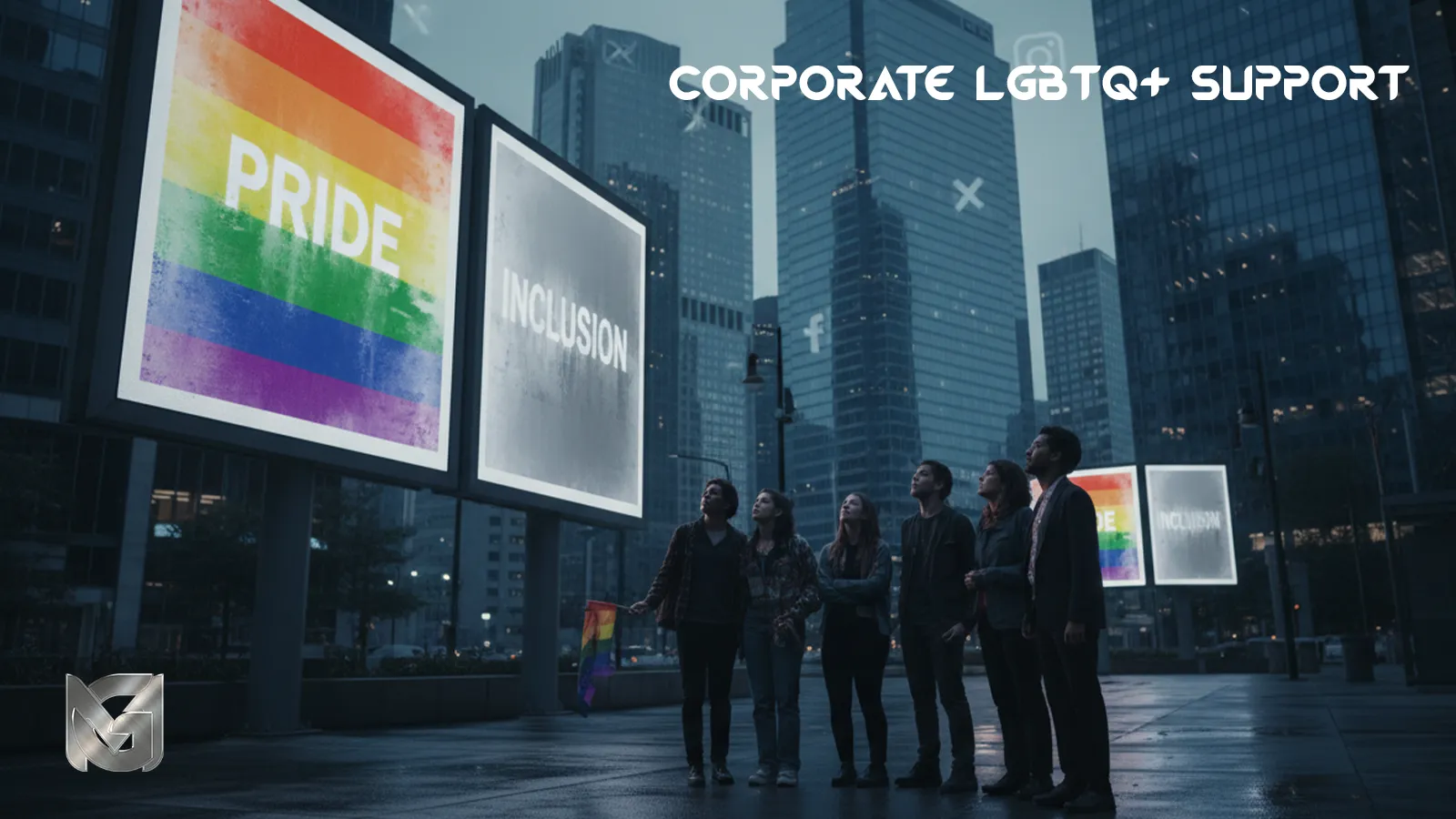
Corporate LGBTQ+ support is at a crossroads. Once a symbol of progress and inclusion, corporate LGBTQ+ support is now facing a significant retreat in public visibility, especially across media and social networks. In recent years, the landscape of corporate LGBTQ+ support has shifted dramatically. Major companies, once celebrated for their vocal advocacy and rainbow branding, are now quietly reducing their public support for the gay community. This trend, visible in both the US and Europe, reflects broader political and social changes. This article explores the causes, consequences, and political context of this rollback, providing an informative and engaging read for Gay Mag.
The Rise and Retreat of Corporate LGBTQ+ Support
From Rainbow Logos to Silence
For much of the 2010s and early 2020s, corporate LGBTQ+ support was on the rise. Brands competed to sponsor Pride events, launched inclusive campaigns, and openly celebrated diversity. However, since 2023, this presence has sharply declined. According to a Guardian analysis, mentions of Pride by major UK and US companies on social media dropped by over 90% between 2023 and 2025. Retail giants like Target and Bud Light have scaled back or muted their campaigns, reflecting a new era of caution.
Why Are Companies Retreating?
Several factors explain this retreat:
Political Backlash: The resurgence of conservative politics, particularly in the US under President Trump, has led to executive orders rolling back diversity, equity, and inclusion (DEI) initiatives. Companies fear backlash from right-wing groups and government investigations into DEI programs.
Economic Uncertainty: Economic pressures, including tariffs and shifting consumer behavior, have led companies to tighten advertising and sponsorship budgets.
Social Media Hostility: Increased attacks and misinformation on platforms like X (formerly Twitter) have made brands wary of taking public stands.
The Political Context: LGBTQ+ Rights and Corporate Strategy
A Hostile Environment
The rollback in public support is closely tied to the current political climate. In 2025, new federal policies in the US targeted DEI programs, creating a chilling effect on corporate advocacy. Similar trends are visible in the UK and other Western countries, where anti-LGBTQ+ rhetoric is on the rise.
The Risks of Silence
While some companies claim they are focusing on internal inclusion rather than public gestures, LGBTQ+ advocates warn that visibility matters. Public support sends a message of inclusion, safety, and opportunity. As Simon Blake of Stonewall notes, “It’s about walking the walk every day, but also making sure that visible signals remain.”
Case Studies: Brands in Retreat
HSBC: Once a leader in Pride-related content, HSBC reduced its posts by 94% between 2023 and 2025.
Target: After facing threats and boycotts over Pride merchandise, Target limited its Pride collection and reduced in-store displays.
Bud Light: The brand’s partnership with a transgender influencer led to significant backlash and a drop in sales, prompting a more cautious approach.
Apple: Notably, Apple increased its Pride-related content, bucking the overall trend.
Corporate LGBTQ+ Support: Behind the Scenes
Despite the public retreat, some companies continue to invest in internal LGBTQ+ networks and diversity programs. However, the reduction in public support has real consequences for visibility and community morale. According to GLAAD, only 14% of companies plan to reduce internal engagement, but most are avoiding public campaigns.
The Future: What’s Next for Corporate LGBTQ+ Support?
A Call for Authenticity
Advocates urge companies to balance internal actions with public visibility. “Companies that show up only when it’s convenient, or backtrack under pressure, risk losing trust,” says Eric Bloem of the Human Rights Campaign. The LGBTQ+ community and its allies are watching closely.
The Role of Politics
As LGBTQ+ rights face new challenges, the role of corporate allies is more important than ever. Whether brands will regain their voice or continue to retreat depends on the evolving political and social landscape.
The Global Perspective: Europe, Asia, and Beyond
While the US and UK have seen the most dramatic pullbacks, the pattern is visible elsewhere. In several European countries, companies are becoming more discreet in their LGBTQ+ support, wary of local backlash or legislative changes. In Asia, where LGBTQ+ rights are still emerging, companies tread carefully, often limiting support to internal initiatives or private events. The global nature of social media means that backlash in one country can quickly spread to others, making brands even more hesitant.
The Impact on LGBTQ+ Employees and Consumers
The retreat from public support has real effects on both employees and customers. Internally, LGBTQ+ staff may feel less valued or visible when their company steps back from public advocacy. Externally, customers notice when brands go silent or remove rainbow branding. According to a 2025 GLAAD survey, 46% of LGBTQ+ consumers say they are less likely to support brands that have reduced their public advocacy, while 38% of employees feel less safe at work.
The Debate: Authenticity vs. Opportunism
Critics argue that some companies only supported LGBTQ+ rights when it was profitable or trendy a phenomenon known as “rainbow-washing.” Now that the political climate has changed, these same companies are quick to retreat. However, there are brands that have maintained their commitment, even in the face of backlash. For example, Apple and Ben & Jerry’s have continued public campaigns and internal support, setting a standard for authentic allyship.
Recommendations for Brands Moving Forward
Stay Consistent: Authenticity matters more than ever. Brands should maintain their support, even if it means less publicity.
Engage Internally: Focus on creating safe, inclusive workplaces for LGBTQ+ employees.
Communicate Clearly: If public campaigns are scaled back, explain why and reinforce internal commitments.
Listen to the Community: Engage with LGBTQ+ organizations to ensure actions align with real needs.
Conclusion
The era of loud and proud corporate LGBTQ+ support is fading, replaced by a more cautious, behind-the-scenes approach. For the gay community and its allies, this shift is a reminder that progress is never guaranteed and that visibility, both inside and outside the boardroom, still matters.
For comments or projects, please contact me.