
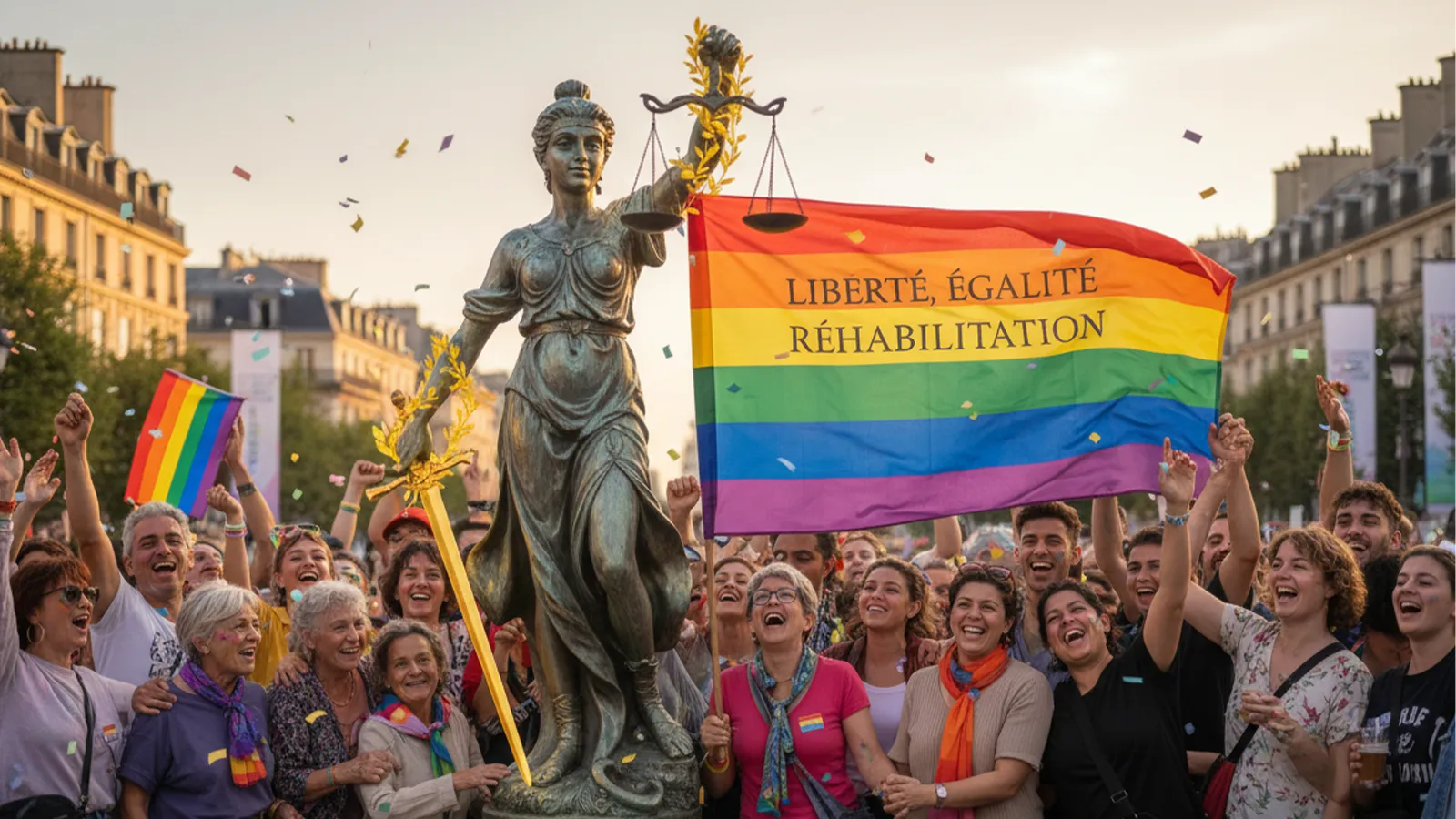
The LGBTQ+ Rehabilitation Law represents a landmark moment in France’s ongoing journey toward equality and justice. In December 2025, the French National Assembly passed this historic law, designed to rehabilitate and compensate individuals convicted of homosexuality under discriminatory statutes—laws that were in force from the early 1940s until their repeal in 1982. This legislation, widely covered in both national and international media, is being hailed as a crucial step in acknowledging historical wrongs, restoring dignity, and promoting a more inclusive society.
Historical Context: Decades of State-Sanctioned Discrimination
For much of the 20th century, French law criminalized consensual same-sex relationships. The infamous 1942 Vichy law, enacted during World War II, specifically targeted homosexual men, and its discriminatory provisions were reinforced by further amendments in the 1960s. Thousands of individuals were prosecuted, resulting in criminal records, public shaming, loss of employment, and social ostracism. Even after the decriminalization of homosexuality in 1982, the stigma and trauma endured by victims and their families persisted for decades.
The LGBTQ+ Rehabilitation Law: Key Provisions and Implementation
The LGBTQ+ Rehabilitation Law officially annuls convictions handed down solely on the basis of sexual orientation. This means that all judicial records related to such convictions are erased, and the individuals concerned are legally recognized as having been wrongfully prosecuted. The law goes further by establishing a process for symbolic and financial reparation. Eligible survivors receive a lump sum of 10,000 euros, supplemented by 150 euros per day of imprisonment served. Importantly, the law allows relatives of deceased victims to apply for posthumous rehabilitation, acknowledging the intergenerational impact of these injustices.
A special committee within the Ministry of Justice has been tasked with overseeing the application process, ensuring accessibility, and providing support to applicants. LGBTQ+ organizations are actively collaborating with the government to guide survivors through the procedures, help them collect necessary documentation, and offer psychological support.
Parliamentary Debate and Political Significance
The adoption of the LGBTQ+ Rehabilitation Law followed months of intense debate and advocacy. Sessions in the National Assembly were marked by moving testimonies from survivors, historians, and human rights activists. Lawmakers from across the political spectrum expressed the necessity of confronting France’s past and reaffirming the nation’s commitment to equality and non-discrimination.
Government ministers emphasized that the LGBTQ+ Rehabilitation Law is not only about making amends for historical wrongs but also about sending a powerful message to future generations. The law’s passage was seen as a reaffirmation of France’s leadership in defending LGBTQ+ rights, both domestically and on the world stage.
The Human Impact: Stories of Resilience and Recognition
For survivors, the LGBTQ+ Rehabilitation Law is more than a legal measure—it is a long-awaited act of recognition and healing. Many individuals who were convicted under these unjust laws have lived with the consequences for decades: broken families, lost careers, and enduring psychological trauma. The story of Bernard Bousset, the last Frenchman convicted for homosexuality, was widely shared in the media. He described the shame and isolation he endured, but also the sense of vindication brought by the new law.
LGBTQ+ associations have played a vital role in supporting victims and advocating for this recognition. Groups like SOS Homophobie and All Out have launched awareness campaigns, organized public forums, and provided legal aid to help survivors navigate the rehabilitation process. The law is expected to encourage more people to come forward and share their stories, contributing to a richer and more inclusive national memory.
Compensation Process and Practical Challenges
The compensation process under the LGBTQ+ Rehabilitation Law is designed to be as straightforward as possible, but some challenges remain. Survivors are required to submit proof of their convictions, which can be difficult to obtain given the passage of time and the destruction of many historical records. To address this, the Ministry of Justice has created a dedicated helpline and online portal to assist applicants.
Some activists have called for additional measures to ensure that all eligible individuals, including those living abroad or in vulnerable situations, can access the benefits of the law. There are also ongoing discussions about providing further psychological support and ensuring that the process is sensitive to the needs of elderly survivors.
European and International Context
France’s LGBTQ+ Rehabilitation Law is part of a broader movement across Europe to address the legacy of anti-LGBTQ+ laws. Germany, the United Kingdom, and several other countries have adopted or are considering similar rehabilitation and compensation measures. Human rights organizations, including ILGA-Europe and Human Rights Watch, have praised France’s initiative, calling it a model for other nations still grappling with the consequences of historical persecution.
The European Union’s LGBTIQ Equality Strategy 2020–2025 has encouraged member states to take concrete steps to address past injustices and promote equality. France’s leadership on this issue is expected to inspire further legislative action across the continent and beyond.
Societal Impact and the Role of Education
While the LGBTQ+ Rehabilitation Law is widely celebrated, activists and educators stress the importance of comprehensive education about LGBTQ+ history. They argue that true reconciliation requires not only legal measures but also public awareness and cultural change. Schools, museums, and media outlets are being encouraged to include the stories of those affected by anti-homosexuality laws, fostering empathy and understanding among younger generations.
Ongoing Challenges and the Road Ahead
Despite this historic progress, the fight against discrimination is not over. Recent reports indicate a rise in hate crimes against LGBTQ+ people in France, highlighting the need for continued vigilance and policy action. Activists are calling for the expansion of anti-discrimination protections, better support services for victims of violence, and ongoing monitoring of the law’s implementation.
The government has pledged to review the LGBTQ+ Rehabilitation Law’s impact annually and to make adjustments as needed to ensure that justice is truly served for all affected individuals.
Conclusion: Toward Justice, Dignity, and Inclusion
The LGBTQ+ Rehabilitation Law stands as a powerful symbol of progress, reconciliation, and hope. It honors the memory of those who suffered under unjust laws and sends a clear message that discrimination has no place in French society. As France looks to the future, this law serves as a reminder of the importance of acknowledging past wrongs and building a more just, inclusive world for everyone.
For comments or projects, please contact me.