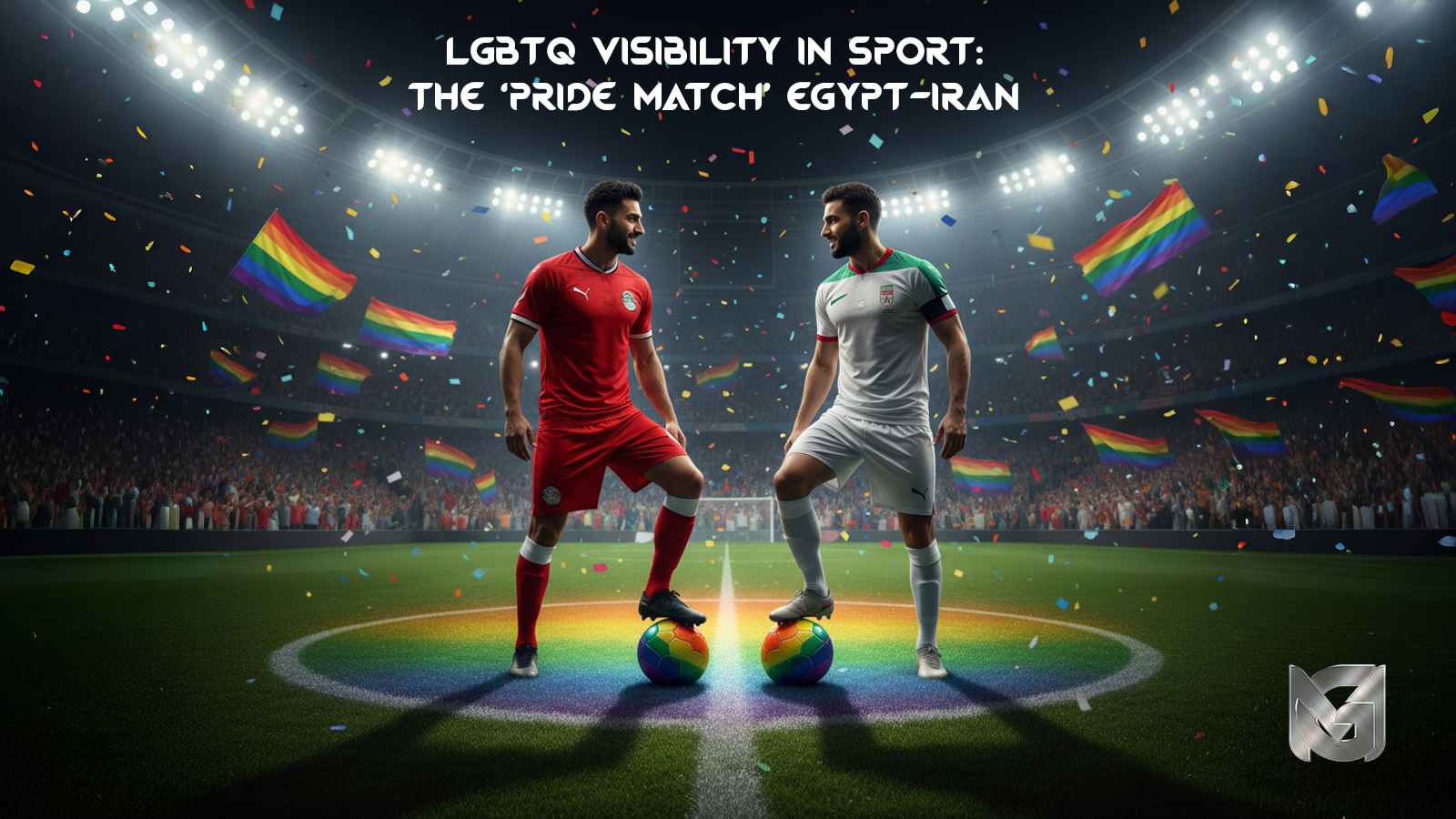
LGBTQ visibility in international sport has never been so intensely in the spotlight as it is approaching the 2026 World Cup. FIFA’s announcement of a ‘Pride Match’ between Egypt and Iran two countries notorious for their repressive laws against LGBTQ people has sparked a global debate. Scheduled for June 26, 2026, in Seattle, this match is meant as an inclusive gesture but also exposes the limits and contradictions of sport when it comes to diversity.
Context: A powerful symbolic gesture
The designation of the “Pride Match”
FIFA decided to label the Egypt-Iran encounter as a ‘Pride Match’ to promote LGBTQ visibility and inclusion in football. While many associations welcomed the gesture, it also drew criticism for being mostly symbolic, lacking concrete guarantees for the safety of LGBTQ supporters and athletes from these countries.
Contrasting reactions from the countries involved
In Iran, homosexuality is punishable by death. In Egypt, repression is carried out through so-called “debauchery” laws. Both national federations have officially protested to FIFA. For many observers, the LGBTQ visibility offered by this match protects neither fans nor players, and may even expose minorities to new risks.
LGBTQ visibility in sport: challenges, progress, and history
A long-standing fight
The struggle for LGBTQ visibility in sport is not new. As early as the 1980s, athletes like Billie Jean King and Martina Navratilova broke the silence, paving the way for new generations. Yet, in men’s football, homophobia remains widespread and coming out is rare.
The example of gay athletes
Some emblematic figures help break the taboo:
Josh Cavallo (Australia): First top-level footballer to come out while still playing.
Thomas Hitzlsperger (Germany): Former international who came out after his career.
Robbie Rogers (USA): Pioneer in MLS.
Guillaume Cizeron (France, figure skating): Olympic champion and activist for LGBTQ visibility.
Their public statements help break the silence, even if their numbers remain limited and social pressure is strong. Others, like Megan Rapinoe (women’s football) and Tom Daley (diving), have become global icons, proving that sport can drive change.
Supporters’ testimonies and community initiatives
Associations such as Panteres Grogues in Barcelona or Paris 2018 have enabled thousands of LGBTQ athletes to express themselves in supportive environments. The Gay Games, held every four years, provide a global stage where diversity is celebrated. These initiatives show that inclusion also relies on supporter engagement and the creation of safe spaces.
The Olympics and “Pride” in 2026
This dynamic isn’t limited to football: at the 2026 Winter Olympics, athletes like Kevin Aymoz and Guillaume Cizeron are working to make the LGBTQ community visible and inspire the next generation. They emphasize mental health, resilience, and the importance of diversity at the highest levels of sport.
Symbolism or pinkwashing?
The limits of media visibility
Many activists warn of the risk of ‘pinkwashing’: FIFA touts LGBTQ visibility without ensuring real progress on human rights. Holding this match in the US while some American states also restrict LGBTQ rights adds to the complexity. Sponsors sometimes profit from an inclusive image without taking concrete action.
Inclusion as a global issue
For LGBTQ visibility to be credible, it must be backed by concrete measures: guarantees for people’s safety, diplomatic pressure, monitoring of violations, and support for affected athletes and fans. Without this, the impact of the ‘Pride Match’ risks being limited to a PR exercise.
Future perspectives and recommendations
Towards truly inclusive sport?
Symbolic initiatives like the Egypt-Iran match should be the starting point for deeper commitment. Federations must adopt protection charters, train staff, and support athletes who speak out. The media also play a key role in giving minorities a voice and highlighting discrimination.
The role of public policy
European governments must lead by example. Passing anti-discrimination laws, funding inclusive sports associations, and recognizing LGBTQ rights in sport are essential to guarantee real equality.
Conclusion
The ‘Pride Match’ Egypt-Iran at the 2026 World Cup symbolizes both the hope for greater LGBTQ visibility in sport and the contradictions and challenges that remain. The voices of gay athletes and allies are crucial for advancing inclusion, but the road to truly open and diverse sport is long. Concrete actions from institutions, the media, and civil society are needed to turn visibility into lasting progress.
For comments or projects, please contact me.