Rainbow Map is eagerly awaited every year by the LGBTQ+ community and its allies. The 2025 edition once again provides a detailed snapshot of the legal and political landscape for LGBTQ+ rights across 49 European countries. This article explores the key findings, emerging trends, and the political context shaping equality, inclusion, and challenges for LGBTQ+ people in Europe.
What Is the ILGA-Europe Rainbow Map?
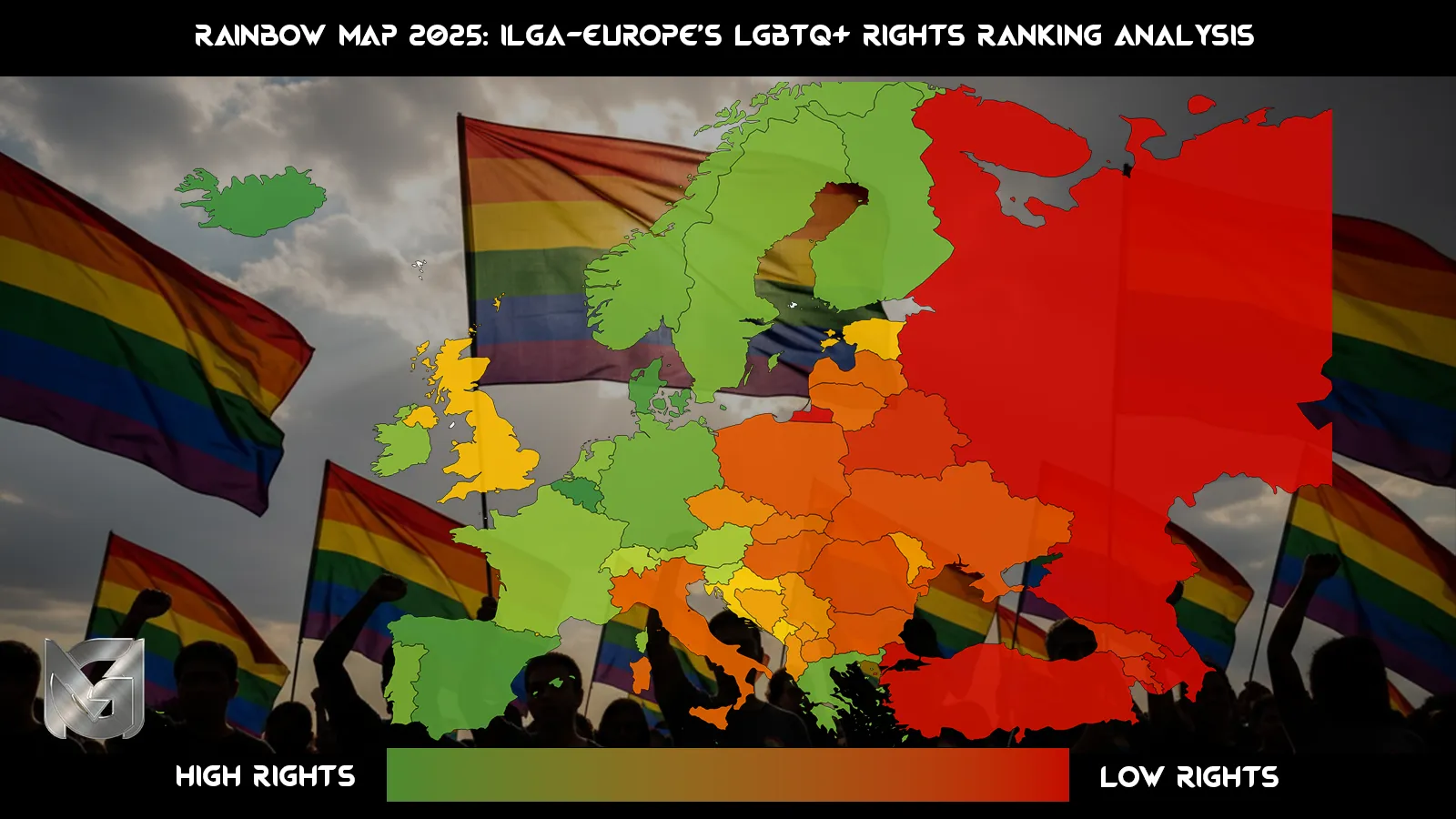
The Rainbow Map is an annual ranking published by ILGA-Europe, assessing countries based on their legal and policy practices regarding LGBTQ+ rights. The 2025 edition scores each country from 0% (gross violations) to 100% (full respect for rights), focusing on areas like anti-discrimination, family rights, hate crime laws, and legal gender recognition.
2025 Key Findings and Rankings
Leading Nations
Malta remains at the top for the tenth consecutive year, demonstrating a consistent commitment to LGBTQ+ rights. Belgium has surged to second place (85%), thanks to new policies against hate based on sexual orientation, gender identity, and sex characteristics. Iceland follows closely in third place (84%).
Countries Falling Behind
At the bottom of the Rainbow Map are Russia and Azerbaijan (2%), and Turkey (5%). Within the EU, Romania (19%), Poland (21%), and Bulgaria (21%) are the lowest ranked. The UK notably dropped six places, reflecting a worrying trend of regression.
Political Context and Policy Shifts
Progress and Rollbacks
The 2025 Rainbow Map reveals a polarized Europe. While some countries are making legislative advances, others are experiencing significant setbacks. The UK, Hungary, and Georgia have seen steep declines, linked to anti-LGBTQ+ legislation and broader democratic backsliding. Rollbacks are often justified under the guise of protecting tradition or stability, but in reality, they undermine human rights and fuel discrimination.
Legal and Policy Developments
Anti-Discrimination: Only a handful of countries, including Belgium and Iceland, have comprehensive anti-discrimination laws covering sexual orientation, gender identity, and sex characteristics.
Hate Crime and Hate Speech: Belgium, Denmark, Greece, Iceland, Malta, and some regions in Spain and the UK have robust protections. Conversely, some countries have erased gender identity from hate crime laws.
Legal Gender Recognition: Germany introduced a self-determination model, and Malta now recognizes non-binary identities on birth certificates. However, countries like Georgia have banned legal gender recognition.
Family Rights: Liechtenstein legalized same-sex marriage. Czechia and Latvia expanded rights for same-sex couples, while Montenegro improved access to medically assisted insemination for LBTQ women.
Civil Society: Hungary, Bulgaria, and Georgia have introduced laws restricting LGBTQ+ visibility and activism, threatening freedom of assembly and expression.
Regional Trends and Challenges
Western vs. Eastern Europe
Western Europe generally leads in LGBTQ+ rights, while Eastern Europe faces persistent challenges often due to political resistance and lack of protective legislation. The gap between progressive and regressive states is widening, raising concerns about the future of equality across the continent.
The Role of Politics
Political will remains the strongest driver of progress or regression. In countries where governments prioritize human rights, legal advances are possible. Where populism or nationalism dominate, LGBTQ+ communities are more vulnerable to setbacks.
Looking Ahead
The 2025 Rainbow Map is both a celebration of progress and a call to action. As Europe faces coordinated backlashes and democratic challenges, the fight for LGBTQ+ rights requires renewed political commitment, vigilant activism, and solidarity across borders.
Conclusion
The Rainbow Map offers a crucial benchmark for understanding LGBTQ+ rights in Europe. While some countries inspire hope, others remind us that equality is never guaranteed. For advocates, policymakers, and readers of Gay Mag, the message is clear: the journey is far from over, and every voice counts in the ongoing struggle for LGBTQ+ rights.
For comments or projects, please contact me.