Le Rouge et le Noir. Some titles hit like a poster in the night, and years later they still stir something tangible, a mix of ambition, desire, social vertigo, and images that refuse to fade.
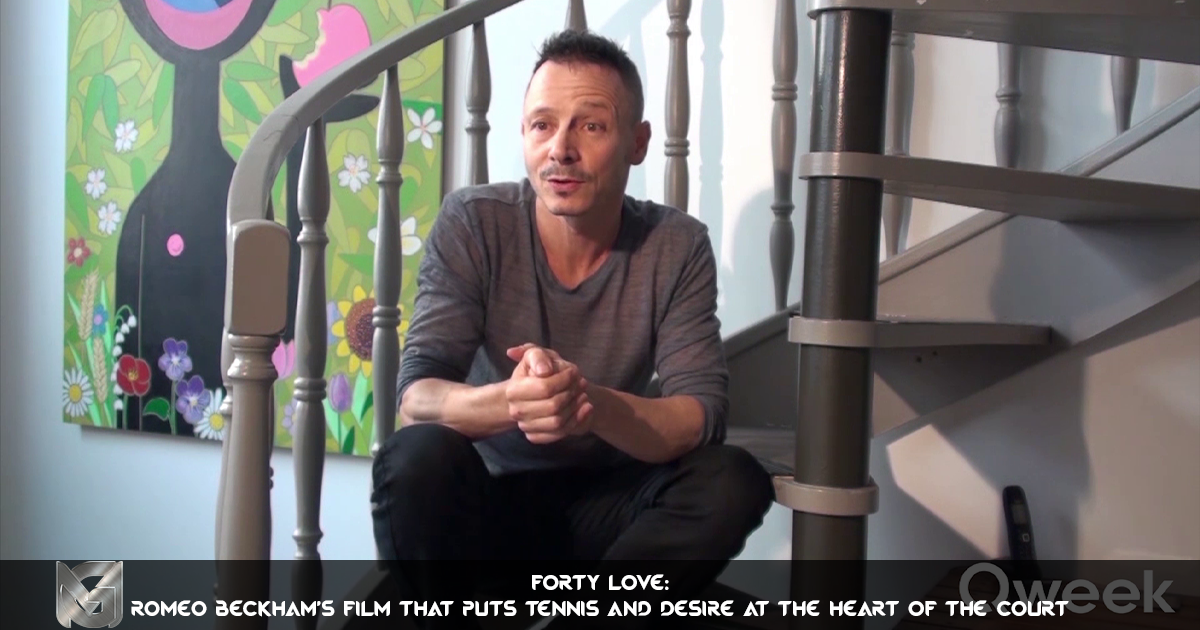
In October 2016, we were there, in a moment both simple and very concrete, editing the interview with Alexandre Bonstein conducted by Grégory Ardois-Remaud for Qweek, as Bonstein was presenting his libretto for Le Rouge et le Noir.
It wasn’t “just” an interview. It was a moment of transmission, one of those tipping points where a work leaves the page, explains itself, defends itself, tells its own story, and where you understand that writing, especially when it takes on a monument like Stendhal, is never neutral. It chooses an angle, an energy, a colour, a rhythm, and it says something about its time.
At Gay Mag, we love those moments when pop culture, the stage, the press, and media-making collide. Because they’re also places where our representations, our narratives, our ways of existing, and of imagining ourselves, are negotiated.
October 2016: a context, a stage, a work searching for its form
In 2016, Le Rouge et le Noir wasn’t just “another musical theatre project.” Adapting Stendhal’s novel into a rock opera fit into a very French trend, big popular musical epics, but with a desire to stand apart through a darker, more rock-driven tone, less polished “variety show” than what we’d seen in other mainstream productions.
Sources from the time highlight several elements: an aesthetic that moves away from classical sets, a major role given to video, and an ambition, to condense a dense novel into a stage narrative that is readable, taut, and emotional.
And that’s where the libretto becomes central. We often talk about the songs, the voices, the staging. But the libretto is the skeleton. It decides what stays, what goes, what transforms, and how you make audible, today, a story written in 1830.
The libretto: where everything gets decided
Adapting Le Rouge et le Noir means choosing how you tell social climbing, class violence, sexuality, religion, shame, pride, strategy, passion. It’s a novel where desire is never “just romantic,” it’s political. And on stage, that can become explosive, or, on the contrary, smoothed out. It all depends on the writing.
Sources from 2016 clearly identify Alexandre Bonstein as the author of the adaptation and the libretto. In other words, the one holding the narrative framework, the one who carries Stendhal into a stage language, a language of rhythm, tension, and scenes.
In a review published in October 2016, the adaptation is described as a difficult bet, but largely a successful one, with the idea that the plot, ambition, darkness, class struggle, and the desire for social ascent are all present in the stage version.
Alexandre Bonstein: adapting Stendhal without embalming him
What’s interesting is that Stendhal, when you reread him, isn’t a “well-behaved” author. He’s clinical, ironic, sometimes brutal. He writes about social domination, calculation, desire as a dangerous engine.
Adapting that into a rock opera is almost logical, if you accept not making it too polite. The modernity of Le Rouge et le Noir lies precisely in that tightrope: telling a 19th-century story without turning it into a museum, and without betraying it by making it harmless.
In presentations from the time, you find that idea of a show that embraces a darker, more rock-forward colour, closer to certain contemporary artistic ambitions.
Julien Sorel: a figure that still speaks
Julien Sorel fascinates because he’s contradictory: ambitious and hypersensitive, seductive and terrified, strategist and vulnerable. He wants to escape his condition, but he pays the price for every mask he puts on.
And that contradiction, on stage, can feel very contemporary. It can echo what many people live through in paths where you have to “present” yourself to the world, hold your ground, defend yourself, sometimes sell yourself, sometimes betray yourself.
The Qweek interview: the memory of a crafted moment, owned and assumed
What we remember from that episode is also the very “media” dimension of the moment. Being there for the edit is being as close as possible to the making of a public narrative.
An interview isn’t only a conversation, it’s an editorial object. You choose a rhythm, you clarify, you cut, you highlight an intention. You build readability. You make a voice shareable.
And in a magazine like Qweek, which documents cultures and scenes often ignored by mainstream media, the interview takes on another value. It becomes an archive. It becomes a trace.
Why it matters to us, today
At Gay Mag, we know LGBTQ+ cultural memory is often built in fragments: a rediscovered interview, a recording, an article, an edit, a backstage recollection.
They’re modest materials, but they form a collective narrative. And when a work like Le Rouge et le Noir circulates in public space, it also carries imaginaries. It can speak to very different audiences, and sometimes touch, without explicitly saying so, queer sensibilities, through its themes, its tensions, its figures of desire and transgression.
A 2016 aesthetic: rock, video, minimalism, and tension
In the reactions from the time, you find the idea of a show that looks more like a “theatricalised concert” than a classic musical.
Video is described as a key tool, with projections and screens, to create places, atmospheres, ruptures. It’s a detail that speaks to us, because images are a language now. And already in 2016, French stages were increasingly using video as a dramaturgy in its own right.
What video changes
Video can speed up the story, create ellipses, add a mental dimension, make social violence visible without overplaying it. For a story like Le Rouge et le Noir, where everything is about gaze, reputation, and façade, it’s an almost natural tool.
Our Gay Mag angle: presence, not nostalgia
The point isn’t to write a “remember when” piece that just says “it was better before.” The point is to tell a precise moment: October 2016, an interview, an edit, a libretto, a work presenting itself to the public.
And to do it with our angle: that of a media outlet that knows culture is also political terrain, a space where norms, desires, hierarchies, and ways of being visible are replayed.
Our line remains the same: name things clearly, stay rigorous on facts, avoid sensationalism, and embrace a reading connected to our communities, without forcing a single interpretive grid.
Reference points (sourced info) : Le Rouge et le Noir
- Period: October 2016 (reviews and presentations published around the show)
- Venue: Le Palace, 8 rue du Faubourg Montmartre, 75009 Paris
- Run mentioned: until 13 November 2016 (according to a review published in October 2016)
- Work: Le Rouge et le Noir, rock opera / musical inspired by Stendhal
- Libretto / adaptation: Alexandre Bonstein
- Songs (writers): Zazie, Vincent Baguian (mentioned in a presentation)
- Music: Sorel, William Rousseau (mentioned in a presentation)
- Staging (mentioned): François Chouquet (mentioned in a presentation)
For comments or projects, please contact me.