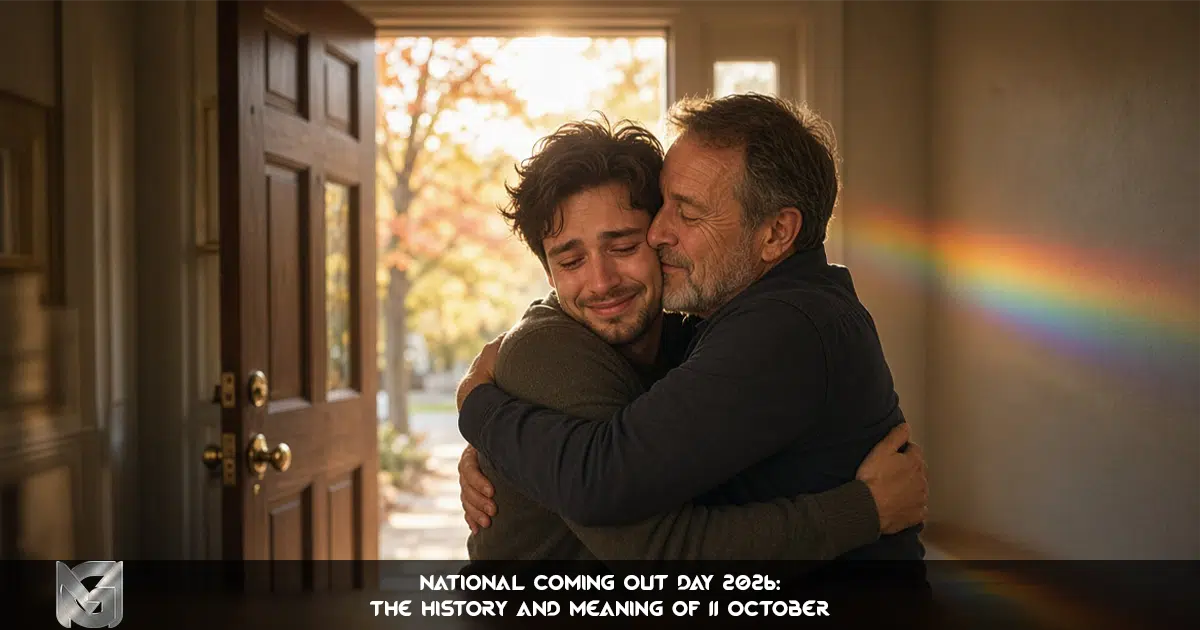
National Coming Out Day returns on Sunday 11 October 2026, and the date is no accident. For almost four decades, this day has invited lesbian, gay, bisexual, trans and queer people to share who they are, at their own pace, and invited everyone else to listen. In 2026 the idea still matters, for very concrete reasons that recent European and American surveys make clear. Here is where it comes from, what it means today, and how to be a good ally when someone chooses you to hear their news.
Where National Coming Out Day comes from
A march, then an idea
The story starts on 11 October 1987 in Washington. That day, the Second National March on Washington for Lesbian and Gay Rights filled the American capital. Organisers put attendance at around 750,000 people, while The New York Times gave a far lower figure of 200,000, published several hours before the march even began. The weekend also saw the first public display of the AIDS Memorial Quilt, created by Cleve Jones, at a time when the epidemic was devastating the community.
A year later, two activists decided to keep that energy alive. Robert Eichberg, a psychologist from New Mexico, and Jean O’Leary, an openly lesbian political leader from New York who then headed National Gay Rights Advocates in Los Angeles, launched the first edition on 11 October 1988. Their reasoning was simple: rather than reacting defensively to every new attack, the movement would celebrate something positive. That first year, participants came from eighteen states and the initiative drew national media coverage.
From a small office to an international date
The early National Coming Out Day campaigns were run from the West Hollywood offices of National Gay Rights Advocates. In 1990 the initiative merged its efforts with the Human Rights Campaign, which still manages it today through its National Coming Out Project, with resources for LGBTQ+ people, couples, parents and children. The artist Keith Haring designed its logo, still one of the most recognisable images linked to the cause.
Today National Coming Out Day is also observed in Ireland, Switzerland, the Netherlands, the United Kingdom and Portugal, and schools, associations and companies mark it well beyond those countries.
Coming out: an older story than you think
From débutantes to the gay world
The expression itself has an unexpected origin. According to the historian George Chauncey, gay men in early 20th-century America borrowed it from high society. Just as a débutante came out into society at her first ball, they spoke of coming out into the gay world. The closet only entered the picture later.
Ulrichs, Hirschfeld and Harvey Milk
The idea of declaring yourself publicly is older still. Between 1864 and 1869, the German jurist Karl Heinrich Ulrichs published pamphlets and gave talks calling for the decriminalisation of sex between men, while being candid about his own homosexuality. The historian Robert Beachy describes him as the first gay person to publicly out himself. In 1914, the sexologist Magnus Hirschfeld imagined several thousand homosexuals revealing themselves together to sway lawmakers and public opinion, before judging the idea politically unrealistic.
The call became a strategy in San Francisco. On 25 June 1978, at the Gay Freedom Day Parade, Harvey Milk, one of the first openly gay elected officials in the United States, urged gay people to come out to their parents, relatives, friends, neighbours and colleagues, to “break down the myths” once and for all. Five months later, on 27 November 1978, he was assassinated at City Hall along with Mayor George Moscone. His argument, that visibility changes minds, is the direct ancestor of National Coming Out Day.
What National Coming Out Day means in 2026
More people are out than ever
The numbers give National Coming Out Day real reasons to celebrate. In February 2026, Gallup reported that 9% of American adults identified as LGBTQ+ in 2025, matching the record set the year before and more than double the 3.5% measured in 2012. Among adults under 30, the figure reaches 23%. Gallup links the rise mainly to younger adults, especially young women, who are far more likely than their elders to name who they are.
Europe tells a similar story. The largest survey ever carried out on the subject, by the EU Agency for Fundamental Rights (FRA), gathered 100,577 responses across 30 countries and was published in May 2024. More than one LGBTIQ person in two now says they are fairly or very open about who they are: 51% across the European Union, 57% in France and 60% in Spain.
But visibility still has a price
The same survey shows why this day is not only a celebration. More than half of the respondents were victims of hate-motivated harassment in the year before the survey, up from one in three in 2019. Two in three say they were bullied at school because they are LGBTIQ, a steep increase on the previous survey. More than one in three have contemplated suicide. And 53% across the EU often or always avoid holding hands with a same-sex partner in public.
The view from Gran Canaria
For readers who know Maspalomas, the Spanish figures deserve a closer look. Spain does better than the EU average on everyday openness: 39% avoid holding hands with a partner, against 53% across the EU, and 58% believe their government effectively fights prejudice, more than double the EU average of 26%. Yet the same respondents are worried. 75% say violence against LGBTIQ people has increased in Spain, and 56% of LGBTIQ students were hiding who they are at school. A welcoming destination for visitors is not always an easy place to grow up.
How to mark National Coming Out Day
If you are thinking about coming out
- There is no deadline. Coming out is not a single announcement but a process that repeats with every new job, new friend or new doctor. National Coming Out Day is an invitation, never an obligation.
- Start with someone you trust, in a place where you feel safe, and think about your practical situation first, especially if you still depend on your family for housing or money.
- You do not owe anyone a label. “I’m gay”, “I like men” and “I’m still figuring it out” are all valid answers.
- Look for support nearby. In Gran Canaria, Gamá, the LGBT collective of the Canary Islands based in Las Palmas, offers psychological and social support.
If someone comes out to you
- Listen first, react later. Thank them for trusting you: that one sentence matters more than any perfect speech.
- Do not ask “are you sure?” and do not make the moment about yourself.
- Ask who else knows. Their news is theirs to share, and outing someone without their consent can put them at real risk.
- Stay the same person afterwards. Invite them, joke with them, ask about their life.
For everyone else
National Coming Out Day is also a good moment for straight allies to show where they stand: a message of support, a rainbow flag at the window, or simply refusing to laugh at a homophobic joke at work. Visibility works both ways.
Stories that change minds
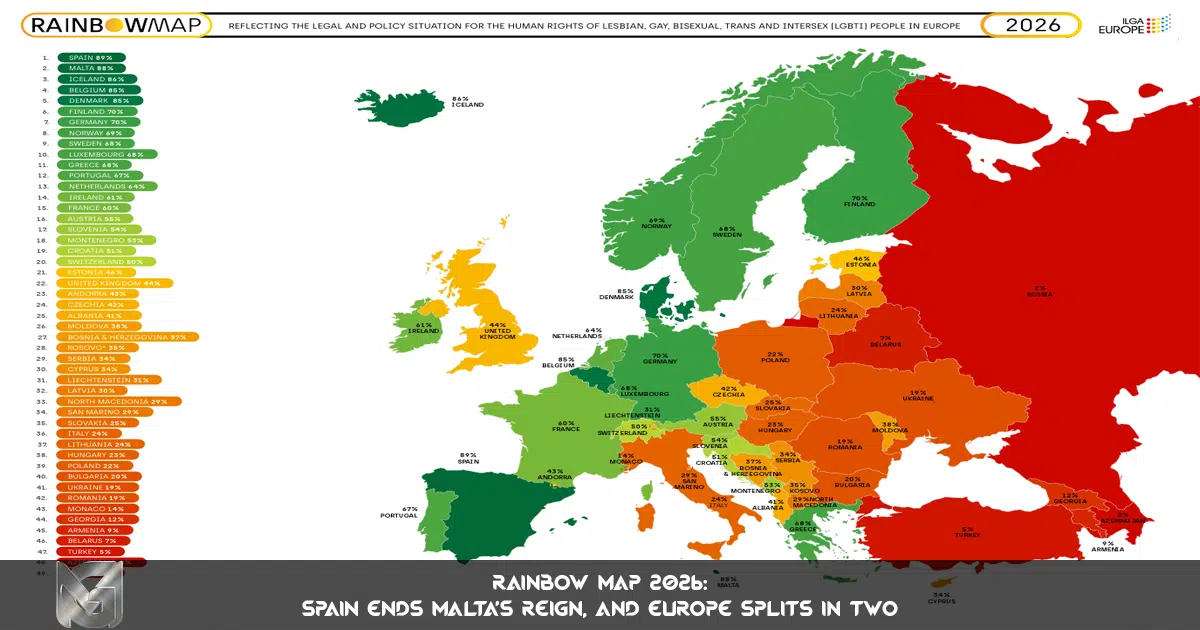
Coming out stories remain one of the most powerful tools for changing attitudes, because they turn an abstract debate into a familiar face. On Gay Mag we have told some of them, from the public coming out of French TV host Frédéric Lopez to the coming out of Will Byers in Stranger Things. To see how well each European country protects its LGBTQ+ citizens, read our analysis of the Rainbow Map 2026.
Why National Coming Out Day still matters
Nearly forty years after Eichberg and O’Leary’s first edition, the bet of 1988 has largely paid off. More people are out, younger generations are more open than any before them, and schools are slowly learning to talk about it. But harassment is rising, and millions of people still weigh their words before taking a partner’s hand in the street. On Sunday 11 October, National Coming Out Day celebrates those who have taken the step, and reminds everyone else of the real goal: a world where nobody has to announce anything at all.
For comments or projects, please contact me.