
Paris Pride 2026 should have filled the streets of the capital in June. Instead, it will march on Saturday 3 October, after a heatwave forced its cancellation. And before it has even started, it has already been targeted: when the City of Paris announced the new date on Facebook, the comments section filled with homophobic, transphobic, racist and Islamophobic messages. The city has closed the comments and filed a complaint. Here is what happened, what was said, and why the march on 3 October now carries a little more weight than usual.
A Pride cancelled by the heat
The story begins on Friday 26 June 2026. Météo France was forecasting 35°C in Paris for the next day, at the end of an exceptional week-long heatwave. According to Têtu, the police prefect asked the organisers to cancel the march planned for Saturday 27 June, citing a high risk of overwhelming an already stretched healthcare system. The Inter-LGBT, the federation of associations that has organised the Paris march for decades, took note of the decision. Its co-president Alexandre Schon did not hide his frustration, telling Têtu that the organisers know how to run a march in 39°C heat. But the association said it did not want to take any risk with public health, and voted to postpone.
Cancelling Paris Pride 2026 came at a cost. By the end of August, the Inter-LGBT estimated it had lost around 50,000 euros, and an online fundraiser had brought in about 10,000 euros, with drag bingos and parties organised to fill the gap.
Paris Pride 2026 moves to 3 October
In August, the new date was set: Saturday 3 October 2026. The route has changed. The Inter-LGBT explained to Têtu that the large number of events postponed to the same period forced it to shorten the original route. The march will now leave from Place d’Italie and end at Place de la Bastille.
An autumn Pride is unusual in Paris, but not unheard of elsewhere. Several European cities hold their marches outside the traditional June window, and we listed many of them in our guide to Pride Europe 2026. For Paris, it is a first of this scale.
The wave of hate under a Facebook post
The trouble started on Monday 21 September, when the City of Paris published a post about Paris Pride 2026 on its Facebook page. Within hours, the comments turned. According to franceinfo, the messages were homophobic, transphobic, racist and Islamophobic. Le Parisien quoted some of them: “Proud of what?”, “the animal march”, or a promise that the “freaks” would be out in the streets.
Nothing new, sadly. Every Pride brings its share of online sneering. What changed this time is the reaction, and the fact that the insults were posted on the official page of the city itself.
The comments closed, the case sent to the prosecutor
Faced with what it called the scale and seriousness of the statements, the City of Paris decided to close the comments section of the post, and to pass the content on to the judicial authorities with a complaint. It is a clear signal: the insults will not simply be deleted and forgotten.
“Not opinions but crimes”
The mayor of Paris, Emmanuel Grégoire, gave the message its tone. Quoted by franceinfo, he said that homophobia, racism and hatred of difference “are not opinions but crimes”, and that the city would file a complaint “every time it is necessary”. He also expressed his full support for the Paris Pride 2026, calling it a major event for the visibility, mobilisation and defence of the rights of LGBTQIA+ people, and said he would march alongside the associations on 3 October.
And the organisers?
At the time of writing, on 24 September 2026, the Inter-LGBT, which organises Paris Pride 2026, has not made any public statement about these comments. There is nothing in the press articles covering the complaint, and nothing among the latest communiqués on its website. We will update this article if the organisers speak out.
This silence can be read in several ways, and we will not guess. What is certain is that the association has had a difficult year. In 2025, the poster of the Paris march triggered a heated controversy and a wave of online attacks, and the Inter-LGBT has spoken since of months of internal tension and pressure. Organising a march that was cancelled, underfunded and rescheduled is a heavy load for a volunteer federation.
What the law says
In France, insulting someone publicly because of their sexual orientation or gender identity is an offence under the 1881 law on the freedom of the press. It is punishable by up to one year in prison and a 45,000 euro fine. A comment on a public Facebook page is public. That is exactly why the city was able to file a complaint over the comments about Paris Pride 2026.
If you see hateful content online, you can report it on Pharos, the official French platform for illegal online content, at internet-signalement.gouv.fr. Screenshots with the date and the link help.
Why this Paris Pride 2026 matters more than usual
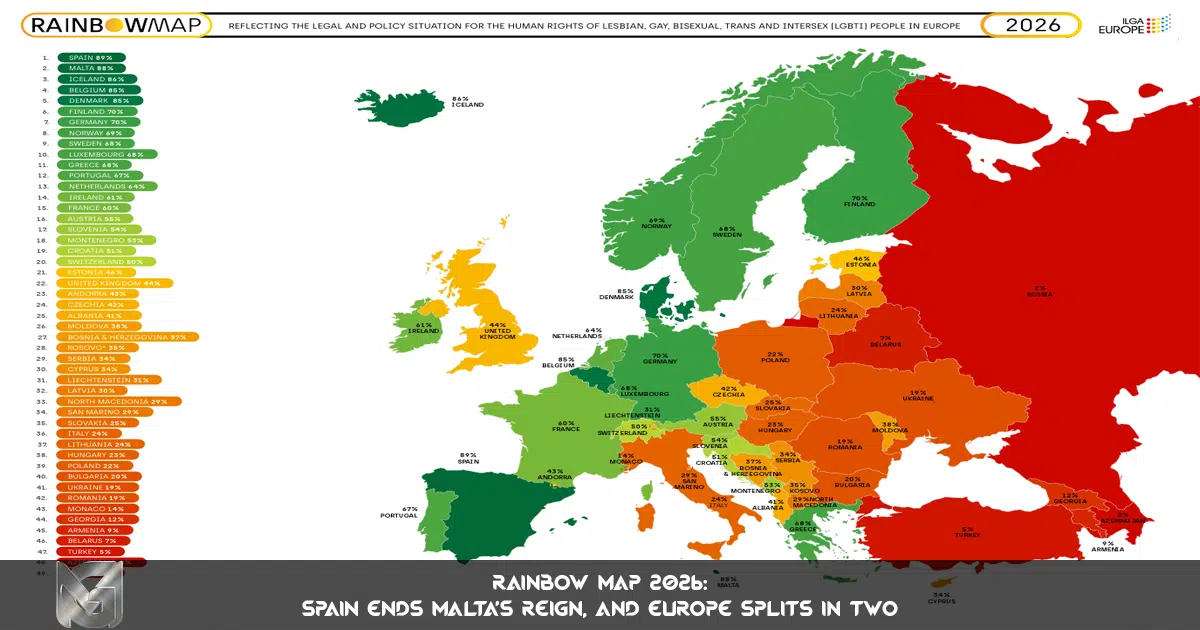
France is 15th out of 49 countries in ILGA-Europe’s latest ranking, with 60%, one point less than last year, as we explained in our analysis of the Rainbow Map 2026. The law protects, but the online climate shows that acceptance is never won once and for all. A Pride that was cancelled, then insulted before it could even take place, turns the march of 3 October into something close to an answer.
The best reply to “proud of what?” is probably to show up at Paris Pride 2026.
Paris Pride 2026: practical information
- Date: Saturday 3 October 2026
- Departure: 1:30pm, Place d’Italie
- Arrival: Place de la Bastille
- Route: Avenue des Gobelins, Rue Monge, Boulevard Saint-Germain, Pont de Sully, Boulevard Henri IV
- Free and open to everyone
- Organiser: Inter-LGBT
The City of Paris announces festivities until 11pm. Timings can still change: check the official site of the march, marchedesfiertes.org, before you go.
For comments or projects, please contact me.