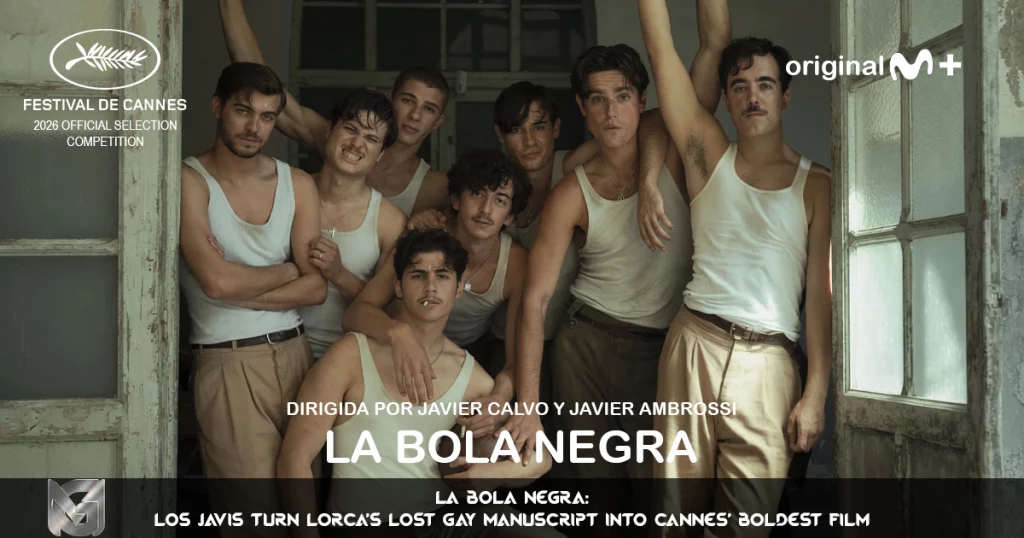
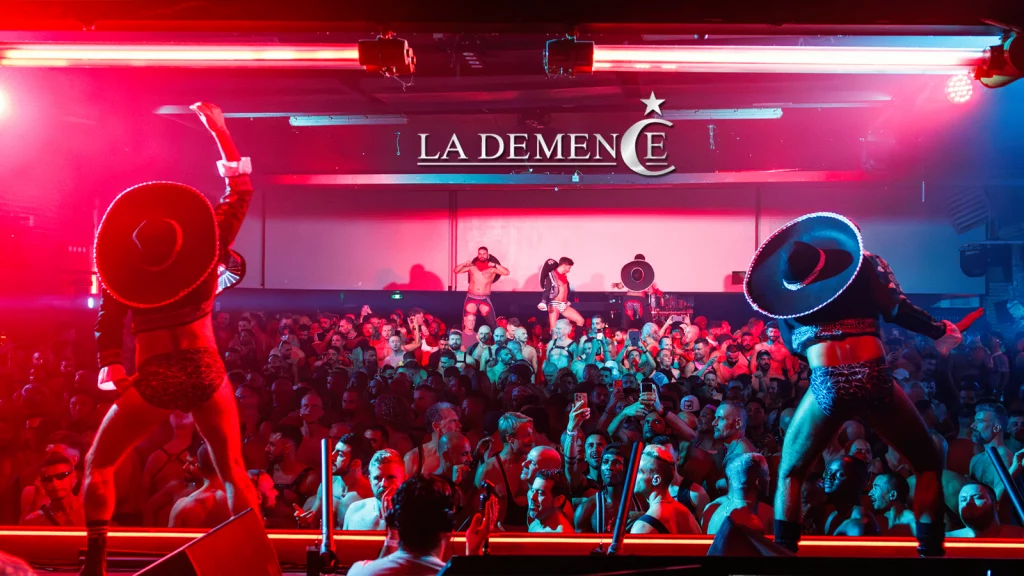
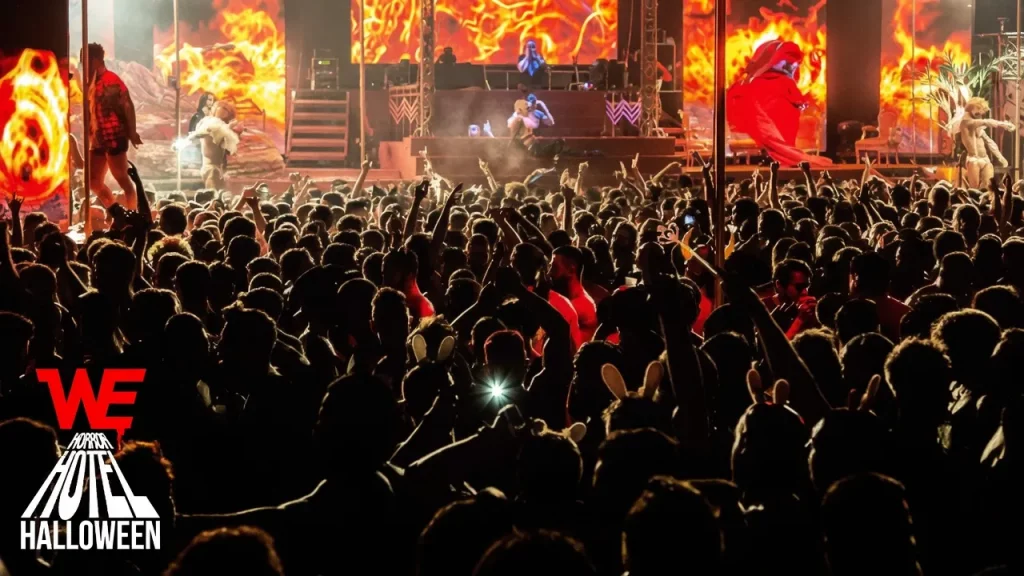
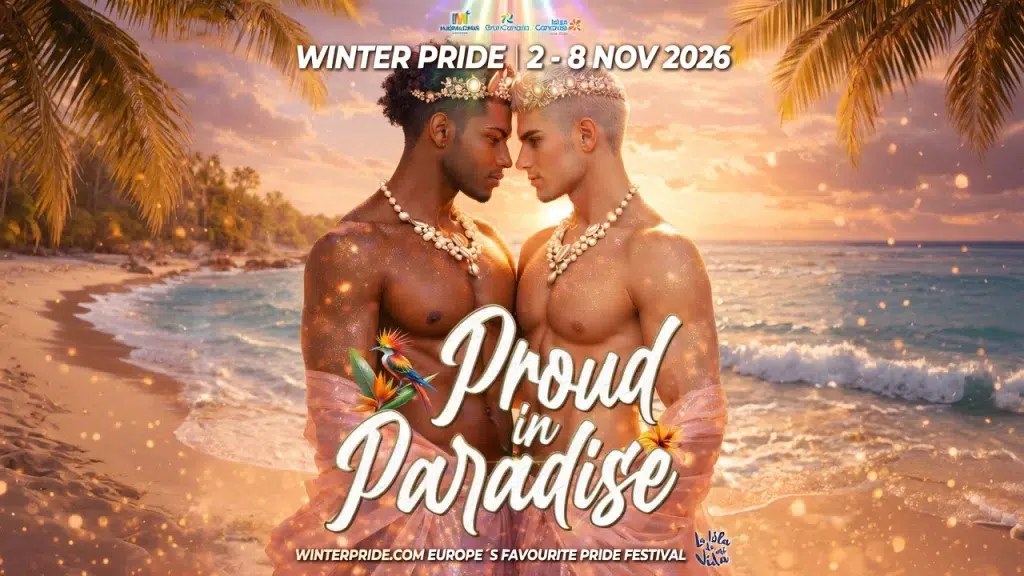
Die Gryn makes an impact with “Vroom Vroom” and the Fake Love era. A visual,...Read More
Gay beaches in Europe: 10 iconic spots, practical tips, vibes, safety, and respect for the...Read More
Coward: at Cannes 2026, Emmanuel Macchia and Valentin Campagne win Best Actor ex aequo for...Read More
Ryan Xavier drops “Lonestar”, a 2026 single that sums up his “toxic CEO” persona, mixing...Read More
Bud sex: why some men call themselves straight while sleeping with men, caught between masculine...Read More
IDAHOBIT 2026. IDAHOBIT is the English acronym for International Day Against Homophobia, Biphobia, Interphobia and...Read More
Pedro Pascal stands out as an LGBTQ+ ally, a cult-series star, and a pop figure....Read More
Pour te plaire, Marius turns desire into a tense electro-chanson. A look at the lyrics,...Read More
Bad Bunny, the Puerto Rican superstar, blends global hits, blockbuster collaborations and outspoken stances, all...Read More
Oh, Otto! Belgian gay mini-series follows a newly single man in Brussels, between hookups, loneliness...Read More
Sitges Pride 2026 is shaping up to be one of the sunniest and most international LGBTQ+ dates on the European calendar. A seaside Pride, a town that moves to the community’s rhythm, and an edition announced as “completely new”, with pool parties, rooftop events, opening parties, and a major Saturday night highlight currently in development.From Wednesday 10 to Sunday 14 June 2026, the Pride promises five days to live at full speed, with concerts at the village, a parade along the seafront promenade, and parties that stretch deep into the night. Here is our complete guide, designed to be useful, clear, and enjoyable to read, with the essential information taken from the official website.
The first thing to note is the calendar: Sitges Pride 2026 will take place from Wednesday 10 June to Sunday 14 June 2026. The organisers insist on one point: the 2026 programme is announced as entirely new, with a more “event-led” approach (pool parties, rooftops, opening parties) and a Saturday night mega event “in preparation”.
The message is clear: “book for 5 days”. The idea is not only to come for the parade, but to live a full week, where each day has its own atmosphere, its own meet-ups, and its own crowd. To make the most of Sitges Pride 2026, the simplest option is to plan your stay for the whole period.
The Pride Village is presented as the main hub of the Pride. This is where the concerts, the after, and a large part of the nightlife come together. If you are coming for Sitges Pride 2026, this is the key reference point to keep in mind.
You come for the collective energy, the shows, the encounters.You leave late, because the night keeps going.And you come back the next day, because it is the meeting point.Even if some programme details evolve, the Village remains the easiest base for finding your bearings, meeting friends, and letting yourself be carried along. In the overall rhythm of Sitges Pride 2026, it is the fixed point.
If there is one moment everyone agrees on, it is the Sunday parade, described as “the main event”. The event draws thousands of people from all over the world and takes place along the sea, which changes everything: the light, the setting, the atmosphere, the feeling of marching (or watching) with the Mediterranean as your backdrop. For many, it is the strongest memory of Sitges Pride 2026.
For the 2026 edition, the parade page indicates that dates and times are pending. However, the website provides useful guidance on how it works and how it unfolds. If you are planning your Sitges Pride 2026 schedule, keep some flexibility, confirmations will come via official announcements.
The announced route:
The website describes a parade that:
It is also mentioned that floats arrive earlier and that participants gather before the start, which is useful if you want to photograph the preparations during Sitges Pride 2026.
Good news: the parade is free to watch. For groups that want to take part, the organisers indicate you should contact AFGAL, mentioned as the Pride organiser. Here again, Sitges Pride 2026 keeps a very open spirit for the public.
The 2026 edition clearly leans into “destination party” formats, with several events highlighted on the homepage. The idea is to offer a complete experience: daytime, sunset, night. And that is exactly what part of the Sitges Pride 2026 crowd is looking for.
The pool party is presented as a “legendary” return, “bigger, hotter, higher than ever”. The website adds an important logistical point: the event takes place in a luxury villa in the hills of Sitges, five minutes from the centre of the Pride Village, with bus transport. For Sitges Pride 2026, this is a key detail: you can enjoy it without the hassle.
For those who want a full daytime clubbing moment in the sun.For fans of “villa” vibes, more premium, more holiday.For photographers, it is also a strong visual playground, very different from the Village.
Another highlighted date: the Sunset T-Dance, described as a unique event to watch the sunset from the rooftop of Hotel MIM. It is exactly the kind of moment that balances the week: less “deep night”, more golden hour, more social, more elegant. In the Sitges Pride 2026 agenda, it is a great pivot between day and night.
After the parade and the concerts, the website points to the After Party at the Pride Village. It is the logical continuation: you do not need to go far, you stay in the flow. And at Sitges Pride 2026, that kind of landmark genuinely simplifies the logistics.
The website highlights a VIP 5 Day Pass. The stated benefits:
If you want to avoid the densest areas, see the shows better, and make certain moments easier, it is an option worth considering, especially on the most anticipated nights of Sitges Pride 2026.
The website stresses that the event “sells out quickly” on the accommodation side. It provides hotel links and recommends booking early. For Sitges Pride 2026, this is key: the longer you wait, the more you risk higher prices and limited availability.
Without going into an endless list, the idea is simple:
This choice of location really changes your Sitges Pride 2026 experience: either you live everything on foot, or you build in travel time.
Sitges is an easy town to do on foot, but some events (like the pool party) are outside the centre. The key information here is the presence of a bus provided by the organisers. For Sitges Pride 2026, that is reassuring.
What sets Sitges apart is not only the party. It is the combination of several factors:
That is exactly why Sitges Pride 2026 speaks so strongly to LGBTQ+ travellers: you are not just at an event, you are in a town that becomes, for a few days, a global village.For Gay Mag, it is exactly the kind of event we can cover through the community lens, the cultural lens, and the travel experience, without losing sight of the essential point: visibility and joy.
As some 2026 details are still being announced (especially precise timings), the website offers an alerts system so you can be “the first to know” about parades, parties, and new features. If you want to follow Sitges Pride 2026 closely, it is the simplest reflex.
If you are planning a trip, keep a clear approach:
This method works very well for Sitges Pride 2026: you secure the essentials, and you keep room for announcements.
Sitges Pride 2026 ticks every box of a “destination Pride”: a photogenic town, a seaside parade, a central village that structures the nights, and a 2026 edition announced as renewed, more event-led, more tightly paced.If you want a Pride that feels like a holiday, without losing the community intensity, Sitges Pride 2026 remains an obvious choice. For comments or projects, please contact me.
Facebook
Instagram
Icon-bluesky
MMT FEST 2026 is back with a very concrete promise, a festival that doesn’t just line up concerts, but builds a complete experience, festive, welcoming, and designed as a cultural showcase. Head to Maspalomas, in the south of Gran Canaria, to a place that is already legendary for many LGBTQ+ travellers, the central plaza of Yumbo Centrum, for four days where live music blends with tourism, fashion, food, and a real message of social and environmental responsibility.
On paper, the idea is simple, but ambitious, bringing music scenes together with the energy of a destination. In practice, MMT FEST 2026 embraces its “destination festival” dimension, with a programme built around key moments (gala, competition, DJ battle, runway show, multi-artist concert) and a stated desire to celebrate diversity, creativity, and human connection.
Music Meets Tourism is the project’s full name, and it says it all, music as the engine, tourism as the setting, and culture as the glue. The official website insists on the fusion of several worlds, and MMT FEST 2026 fits exactly into that logic.
The heart of it remains the stage, concerts, performances, DJ sets, and events that go beyond a single show. The announced spirit is that of a town living to the rhythm of the festival, with activities and performances in hotels, in the street, and in emblematic spaces. That’s also what makes MMT FEST 2026 feel especially alive, you don’t just come to “watch”, you come to “live” the event.
Maspalomas and the Costa Canaria are not just a “host location”. The festival presents itself as a four-day experience designed to discover great music while connecting with the essence of the environment. In short, MMT FEST 2026 is lived like a getaway, sunshine, atmosphere, encounters, and that sense of having experienced something broader than a concert.
The event claims a cross-disciplinary identity.
For a media outlet like Gay Mag, this mix is interesting because it matches a very current way of experiencing events. And in this approach, MMT FEST 2026 ticks a lot of boxes without feeling like an artificial concept.
The festival takes place at Yumbo Centrum in Maspalomas, presented as one of Europe’s most popular tourist centres, with a stated capacity of more than 20,000 people. The site describes an open-air space transformed into a giant stage to celebrate diversity, creativity, and responsible pleasure. In that setting, MMT FEST 2026 takes on a very particular dimension.
Choosing Yumbo is not neutral. For many LGBTQ+ travellers, it’s part of Europe’s queer emotional map. Bringing MMT FEST 2026 into this setting is also a message, here, the party is visible, embraced, and connected to a destination that already moves to the rhythm of the communities.
The announced calendar places the festival from 11 to 14 June 2026. Four days is long enough to build momentum, let word of mouth spread on site, and allow people to dip in according to their mood. For many, MMT FEST 2026 will also be a chance to plan a real early-summer break.
The site also highlights a particular collaboration, on 10 June, Music Meets Tourism teams up with Sala Scala for an evening presented as a unique experience where music, food, and show come together.
It features NOMAD, a dinner show with staging and a tasting menu, conceived as a sensory journey. And, importantly, artists from the Concurso Internacional de Cantantes MMT 2026 are expected to appear at different moments during the evening, as a showcase for emerging talent. For festivalgoers, it’s exactly the kind of format that extends the MMT FEST 2026 experience beyond the main site.
The festival structure is presented like a progression, with a clear narrative, a prestigious opening, a creative day, a focus on voices, then a big popular finale. This storytelling gives MMT FEST 2026 a real backbone.
The festival begins with the MMT Awards gala, presented as a night dedicated to recognising inspiring journeys across varied fields.
The site explicitly cites areas such as:
It is also stated that the awards have a charitable component, with proceeds intended for social projects, and support mentioned for Fundación Isabel Gemio, linked to research into rare diseases. On the prestige side, the site recalls that figures such as Ágatha Ruiz de la Prada, Pastora Soler, Soraya, Petro Valverde, Isabel Gemio, or Miguel Ángel Mellado have been honoured in previous editions. This opening gives MMT FEST 2026 an “event” tone rather than a simple succession of shows.
The second day blends fashion, electronic music, and live performances.
The MMT Fashion Show runway is described as a meeting point for national and international designers, with the aim of turning fashion into an accessible spectacle.
Then comes the DJ battle, with a competitive dimension, national and international artists, a professional jury, and the audience. The appeal of this format is that it creates a “sport-like” tension within the party, you come to support, compare styles, and experience sets as performances. In the overall economy of MMT FEST 2026, it’s a true signature moment.
The third day is presented as the Concurso Internacional de Cantantes, a very talent-driven moment where singers from different countries perform live.
The site specifies a concrete prize for the winner, the opportunity to record a professional single and benefit from international promotion. That point changes the perception, this isn’t a gimmicky contest, but a system designed to act as a springboard. Once again, MMT FEST 2026 leans into the idea of discovery and career paths.
The day ends with a performance by a recognised artist, announced as the high point of a day dedicated to voices.
The festival closes with the Multiconcierto Music Meets Tourism, described as a celebration bringing national and international artists together on one stage.
The site indicates that the official line-up for the 2026 multi-concert will be announced soon, but offers a strong reference point by citing artists who appeared in the previous edition, Abraham Mateo, Melody, Jorge González, Las Supremas de Móstoles, Neo Pinto, Kuve, Carla Frigo, J Kbello, Divas, and Nathan Music. Even without revealing the full 2026 bill yet, this reminder serves as a signal, MMT FEST 2026 is aiming for real scale and strong media resonance.
The site asks a simple question, “¿Qué puedes vivir en MMT FEST?”, and answers with a phrase that sums up the ambition well, it’s not only a festival, it’s a way of living, feeling, and transforming.
From a Gay Mag perspective, you can translate that into a promise, come for the music, stay for the atmosphere, and leave with the feeling you took part in something collective. And that’s exactly what MMT FEST 2026 is trying to spark.
The food market is not a detail. In modern festivals, food has become part of the experience, a place where you sit, talk, and meet people. The announced idea is a mix of quality local cuisine and international influences. In the spirit of MMT FEST 2026, it’s also a way to bring audiences together.
The site mentions a clear social and environmental commitment and cites causes such as Pequeño Valiente and Fundación Isabel Gemio. Without overselling it, it’s an important marker, a festival that embraces a meaningful dimension and wants to make the idea of responsible pleasure real. On this point, MMT FEST 2026 positions itself clearly.
MMT FEST takes place in Maspalomas, and that fact alone creates an immediate resonance for part of the European LGBTQ+ public. But the key is not to lock the event into a box.
For Gay Mag, the fairest editorial angle is to say, here is an event happening in an emblematic place, celebrating diversity, and offering a complete experience. Everyone can project their own weekend onto it, clubbing, concerts, fashion, food, or all of it at once. And for that, MMT FEST 2026 has real potential.
The site points to an Entradas (tickets) page and also communicates via its social channels. To plan a trip, the key is to keep an eye on:
The site lists dedicated contacts:
What stands out is the desire to create a rendezvous that goes beyond the concert, a festival lived like a getaway, with a prestigious opening, participatory formats (competition, battle), a focus on fashion, a real food space, and a message of commitment.
If you like events where you can alternate big nights with more experience-driven moments, if you like the idea of spending four days in a sunny destination, and if you want to leave room for surprise (line-up still to come), then this date clearly has something to play in the 2026 calendar.
To follow official info and updates, the best option is still the website.
For comments or projects, please contact me.
Facebook
Instagram
Icon-bluesky
Pride Barcelona 2026 is more than a party week, it is one of the most visible LGBTQ+ gatherings in Southern Europe, blending celebration, community, and advocacy in a city that knows how to welcome visitors. Barcelona has long been a reference point for queer culture, nightlife, and beach life, but also for civic engagement and a strong network of local associations.
For Gay Mag readers, Pride Barcelona 2026 is a good excuse to do two things at once, enjoy a major summer event and take the pulse of LGBTQ+ Europe, where progress and backlash often coexist. The best way to approach Pride Barcelona 2026 is to plan with a clear head, keep your expectations realistic about crowds and prices, and leave room for spontaneous moments, because Barcelona always rewards curiosity.
The official calendar for Pride Barcelona 2026 may evolve, but the structure of the event is usually consistent, a multi-day festival with concerts, community stands, talks, and a big parade weekend.
If you are travelling specifically for Pride Barcelona 2026, check official updates close to your booking dates. Pride schedules can shift due to permits, security, or production constraints.
The parade is the emotional core of Pride Barcelona 2026, but it is also the moment when the city becomes the most intense. If you want a great experience, treat it like a big outdoor event.
For photographers, Pride Barcelona 2026 is visually rich, but be respectful. Ask for consent when you are close, especially with fetish looks, drag performers, or anyone who may not want a tight portrait.
Barcelona is not huge, but where you sleep changes your whole Pride Barcelona 2026 experience.
This is the classic choice. You are close to many LGBTQ+ bars, restaurants, and late-night spots. It is convenient, central, and easy for taxis and public transport.
A strong alternative for Pride Barcelona 2026, slightly calmer than the busiest streets, still very walkable, and full of good food.
If you want a more local vibe and easier access to beaches, Poblenou is worth considering. It can be a smart base if you plan to mix Pride Barcelona 2026 with daytime beach time.
Beautiful, atmospheric, and tourist-heavy. Great for first-time visitors, but expect noise and higher prices.
Pride Barcelona 2026 nightlife can be amazing, but it is easy to burn out if you try to do everything. Pick a few key nights and protect your sleep.
These are often big, high-energy, and international. Expect queues, higher drink prices, and packed dance floors.
Barcelona has a long-standing fetish culture, and Pride Barcelona 2026 usually brings special events. If you go, read the door policy, respect consent rules, and do not treat it like a zoo.
Do not underestimate the value of daytime Pride Barcelona 2026 moments, beach meetups, terrace drinks, and community talks can be more memorable than another crowded dance floor.
Barcelona is one of the easiest cities to navigate during Pride Barcelona 2026, as long as you accept that some areas will be slow.
If you have mobility needs, plan routes in advance and keep an eye on official accessibility information.
Pride Barcelona 2026 is peak season. Prices rise, and availability drops.
If you want to do Pride Barcelona 2026 without overspending, book accommodation early, eat like a local, and prioritise one or two paid events instead of chasing every ticket.
Barcelona is generally safe, but Pride Barcelona 2026 crowds create opportunities for pickpockets and scams.
Pride Barcelona 2026 is a space of expression, not a free-for-all. Ask before touching, photographing up close, or making assumptions about someone’s identity or boundaries.
If you are travelling for Pride Barcelona 2026, give yourself time to see the city beyond the official programme.
This is also where Pride Barcelona 2026 becomes more than a checklist, it becomes a trip with texture.
Barcelona struggles with overtourism. Pride Barcelona 2026 brings joy, but also pressure on neighbourhoods.
To make Pride Barcelona 2026 smooth, here is a simple checklist.
Pride Barcelona 2026 is at its best when you treat it as both celebration and community moment. Come for the energy, stay for the people, and leave with a clearer sense of what LGBTQ+ visibility looks like in Europe right now. If you plan well, pace yourself, and keep your curiosity switched on, Pride Barcelona 2026 can be one of the most satisfying Pride trips of the year.
For comments or projects, please contact me.
CSD Berlin 2026 is not just a party date, it’s a major political marker in Europe, a demonstration of visibility, solidarity, and resistance, at the heart of a city that has made freedom its signature, while knowing that nothing is ever guaranteed. In 2026, Berlin is going big, very big, with an extended Pride weekend, a structured Pride Month, and a campaign that confidently blends pop codes with a clear civic message.
In this guide, we give you a complete, enjoyable, and practical read to plan your trip, understand the spirit of the 2026 edition, spot the key moments, and, most importantly, know where and when to be.
Berlin’s Pride is built around two major beats: a full month of events, then a final weekend that concentrates maximum energy.
For the fifth time, Berlin is running Pride Month Berlin, designed to give more space to issues, encounters, debates, and a diversity of formats, beyond the single day of the march. The idea is simple, and honestly welcome: Pride is not just a parade, however powerful it may be. It also lives in workshops, discussions, community events, culture, health, and moments of connection.
Pride Month 2026 runs from 26/06 to 25/07/2026, with an interactive calendar of events (panels, workshops, parties, meet-ups, etc.) available on the official website.
Big change for 2026: CSD Berlin unfolds over two days, a first in its recent history.
This weekend format matches the stated ambition: more visibility, more political content, more accessibility, and more room for the community.
CSD Berlin 2026 is built around a central slogan: “HALTUNG IST HOT” (“Having a stance is hot”). The concept deliberately plays with dating language, “green flags”, and punchlines to carry a very concrete message: Pride is political, and 2026 is shaped by the Berlin Parliament election (Abgeordnetenhauswahl) in September 2026.
CSD Berlin 2026 says it wants to encourage civil society, the city, the economy, and the community to “show a stance”, and to use voting as Pride’s extension. A notable point: 16–17-year-olds will be able to vote for the first time in this election, and the campaign also targets that generation.
Berlin has a reputation as an “obvious” queer capital. But CSD’s message is that visibility is not enough if material conditions deteriorate: safety, community spaces, project funding, healthcare, education. In short: Pride 2026 aims to be an amplifier, not a backdrop.
This is the weekend’s beating heart. And if you’re covering the event (or simply want to optimise your experience), details matter.
The first vehicles and groups are expected to reach the closing zone around 15:30 (estimate).
The demo crosses central locations, with a logic that is both symbolic and practical. The announced 2026 route includes:
For photographers and media, a few points are naturally strong: Potsdamer Platz (big axes), Nollendorfplatz (historic queer anchor), and the finale near Brandenburger Tor (iconic images).
The official site clearly reminds readers that this is a political demonstration, and participation is free for everyone, whether you’re walking, on a float, or watching.
Pride Month isn’t just “an agenda”. It transforms the Berlin experience: you can come earlier, stay longer, and live a Pride that’s less compressed.
The Pride Month calendar highlights a range of formats: talks, workshops, cultural events, community meet-ups, parties, and key moments. The benefit is that everyone can find an entry point: activism, culture, health, empowerment, social connection, or celebration.
Pride Month Opening is announced as the season’s kick-off, under the theme “HALTUNG IST HOT”, with a stage programme mixing moderation, political speeches, and artistic contributions.
If you want to catch the “politics + stage + community” vibe before the big demo, this is a strategic moment.
Berlin is Berlin, let’s not pretend otherwise. Partying is part of Pride, and CSD Berlin highlights official events.
House of Pride is presented as the official “main party”, celebrating its 5th anniversary in 2026. The event announces:
Venues mentioned: Ritter Butzke, Kreuzwerk, and AQUAHÖFEN Berlin (as per the event communication).
Tickets start from €20, with multiple categories, including a Support Ticket (cheaper) for under-21s, students, apprentices, and people receiving social assistance.
Notably, the site states that CSD Berlin e.V. benefits financially from this event, which gives it a “party that supports” angle.
The site also highlights FLINTA ONLY* parties, with a clear intention: create safer, centred, and powerful spaces.
This matters for audiences: Berlin offers huge mainstream events, but also more targeted, more protective, more intentional frameworks.
The site mentions accessibility efforts: reduced-barrier zones, sign language interpretation during the closing event, accessible toilets along the route, with details published in July.
On participation, it also states that organisations can join with their own vehicle, via a registration process.
For Gay Mag, this is essential to underline: Pride isn’t just “showing up”, it’s also being able to show up, in good conditions.
Two elements strongly stand out in official communications.
The “second day” (Friday) is explicitly presented as a democracy moment, and the campaign draws a direct line to the Berlin election. CSD Berlin embraces a Pride that talks about institutions, voting, and societal choices.
CSD Berlin 2026 e.V. says it intends to bid to host WorldPride 2032, which would be a first for Germany if successful. They connect this ambition to concrete needs: long-term investment, queer infrastructure, culture, education, the local economy, and democratic protection.
The site also lists six “central demands” (support for the WorldPride bid, protection of queer spaces, safety against queerphobic violence, visibility in education, queer-competent healthcare, long-term funding for major events).
Even if you’re coming to dance, these points give you a reading frame: Berlin wants to remain a queer capital, but it also wants to prove it politically.
The 2026 route crosses very photogenic spots. If you want to tell a story, vary:
CSD Berlin 2026 promises a massive weekend, but above all a Pride that owns what it is: a demonstration, in the literal sense. A presence in the street, a message, a community that shows itself, protects itself, and projects forward.
And if the slogan “HALTUNG IST HOT” works, it’s because it tells a simple truth: in a world that is polarising, showing your stance isn’t a bonus. It’s a necessity. Berlin stages it, and we’re going to celebrate, yes, but also to count.
For comments or projects, please contact me.
https://gay-mag.com/wp-content/uploads/2026/06/CSD-Berlin-2025-AFTERMOVIE.mp4
Facebook
Instagram
Icon-bluesky
Paris Pride March 2026. Three words for a date that matters, loud, joyful, visible, but above all political. On Saturday 27 June 2026, Paris and the wider Île-de-France region will host the 49th edition of the Pride March, organised by Inter-LGBT. It is a moment that brings people together, protects, and pushes forward, while reminding us of a hard truth, rights are never permanently secured.
In this Gay Mag guide, we break down what the Paris Pride March is, why it still matters in 2026, and how to take part, whether you’re coming with friends, joining a group, registering a contingent, or volunteering behind the scenes.
The Paris Pride March is a yearly landmark, sitting right at the intersection of demonstration and celebration. For Gay Mag, Paris Pride March 2026 is also a major editorial moment because it tells the story of a community as much as it gathers it.
Numbers help you picture the scale, but they don’t capture the whole point. Pride is also about taking public space, being counted, recognising each other, and making visible lives that are still too often pushed to the margins. In that sense, Paris Pride March 2026 is both a mass event and a collection of personal stories.
The Pride March is not “just a parade”. On the official website, it is presented as one more step towards equality and one more voice against discrimination. That double nature is essential, and it is precisely why Paris Pride March 2026 can never be reduced to “a vibe”.
Marching means stating, clearly, that discrimination and violence against LGBTQI+ people still exist, through insults, assaults, exclusion, unequal access to housing and work, barriers in healthcare, family rejection, and everyday hostility in public spaces.
That is why Pride is also democratic pressure. It’s where people demand public policies, protections, resources, and consistency between what leaders say and what institutions actually do. In that framework, Paris Pride March 2026 functions as a yearly reminder, and sometimes as a wake-up call.
The party is not an “extra”. It is part of the message. Dancing, singing, kissing, laughing, showing up, is also a response to the pressure to stay discreet, to feel shame, to disappear.
Celebration is a language. It says, we are here, we exist, we have cultures, communities, histories, bodies, and loves. That’s why Paris Pride March 2026 needs to remain both joyful and demanding.
The question comes back every year, sometimes with a hint of fatigue, “Again?” And the answer is simple, as long as real equality is not here, as long as safety is not guaranteed, as long as rights can roll back, we march.
The official website frames 2026 as another year to keep moving forward. Pride is not a frozen commemoration, it’s a social barometer. And Paris Pride March 2026 fits squarely into that logic.
Visibility doesn’t solve everything, but it changes the balance of power. It creates reference points for younger people, offers models, and breaks isolation.
The march is also where associations, collectives, unions, allies, and communities meet. You see struggles intersect, health and prevention, trans rights, anti-racism, fighting precarity, and resisting violence.
Good news, it’s simple. The official website is clear, to take part, you just have to show up. In practice, Paris Pride March 2026 is open and designed so everyone can take their place.
You can come alone, with friends, as a couple, with your chosen family. You can be discreet or flamboyant, in shorts, leather, drag, a t-shirt, a harness, sportswear, office clothes, or full Pride look.
The point is elsewhere, being present, being visible, being in solidarity. And yes, Paris Pride March 2026 is also for people who are not used to “taking the streets”.
Without turning this into a survival guide, a few obvious things make the day easier.
If you are part of an association, collective, activist group, union, or organisation that wants to march together, the website offers a contingent pre-registration process. It’s another way to experience Paris Pride March 2026, more structured, more collective, and often more explicitly political.
The pre-registration page provides a key document, the 2026 requirements/specifications (available for download). It sets a framework, and that’s a good thing, an event of this size needs rules to stay aligned with its values and safety.
If your organisation already marched in the previous edition, the page also includes a route for returning participants.
A contingent is not just “a group with a banner”. It is a public statement. It implies respecting the spirit of the march, joining a collective dynamic, and not turning Pride into a disconnected marketing operation. In that sense, Paris Pride March 2026 carries an implicit rule, you march with others, not above others.
We talk a lot about floats, slogans, outfits, and photos. We talk less about the people who make it all possible. Yet the march relies on massive mobilisation. And without them, Paris Pride March 2026 simply wouldn’t have the same scale.
The website highlights 300+ volunteers. Concretely, that means stewarding, logistics, welcoming, coordination, safety, and information.
The “Volunteer” page provides a 2026 Volunteer Charter (downloadable). That’s important, volunteering means joining a collective organisation with responsibilities.
If you want to live Pride differently, closer to the teams and the real mechanics of the day, it’s a strong, useful, and often deeply human option. For many people, Paris Pride March 2026 is also experienced from the backstage.
The march doesn’t happen in isolation. The website invites visitors to explore Pride Week, with a link to the dedicated programme. In spirit, it’s a perfect runway into Paris Pride March 2026.
Pride Week expands Pride beyond a single day. It typically includes cultural events, community gatherings, parties, discussions, prevention-focused moments, and spaces for memory.
For Gay Mag, it’s also rich editorial ground, because Pride is not only the final image, it’s everything that gets built beforehand. And Paris Pride March 2026 makes more sense when you follow what leads into it.
The Pride March is carried by Inter-LGBT, which also supports other events referenced on the website, such as Printemps des Assoces and the Course des Fiertés.
Without diving into organisational charts, the idea is simple, Paris Pride is structured by an association ecosystem. That provides continuity, memory, and the ability to defend political positions.
The website provides contact addresses, including a general email and a press-focused contact. If you are covering the event, proposing a partnership, or asking an organisational question, that’s where to go. For editorial teams, Paris Pride March 2026 is also something you prepare well in advance.
Pride is freedom. But it is also shared space. To keep the day beautiful, a few simple principles help.
Don’t touch people without consent, even for a photo. Don’t comment on bodies. Don’t turn identities into “debate topics”.
Yes, you come for celebration. But you also come because celebration has meaning. Take time to read signs, listen to slogans, spot associations, and talk.
If you shoot images, think about consent, especially for people who could be put at risk by unwanted exposure. Pride is public, but people’s safety comes before “content”. In a city like Paris, Paris Pride March 2026 must remain a space where people feel safe.
Paris Pride March 2026 is not just a date to tick off. It is a moment when the community looks at itself, tells its story, protects itself, sometimes argues, and keeps moving.
It is also a message to those who would prefer us silent, invisible, obedient, you will not get our shame, and you will not get our erasure.
And if you are still hesitating, remember this, Pride is not only for the confident. It is also for people who doubt, who are newly out, who are looking for a place to breathe. For many, Paris Pride March 2026 begins right there, the moment you decide to come.
See you on 27 June 2026, in the streets of Paris.
For comments or projects, please contact me.
Every summer, Madrid turns into a European capital of visibility, celebration, and protest, all at once. The atmosphere is huge, the streets are packed, and the city feels like one continuous open-air stage. But what makes Pride Madrid (Madrid Orgullo, often shortened to MADO) truly special is the balance between joy and purpose. It is a festival, yes, but it is also a collective statement, a cultural season, and a reminder that equality is never something we can take for granted.
According to the official website, Madrid Orgullo 2026 runs from 25 June to 5 July 2026, with the central moment being the main Pride demonstration, announced for Saturday 4 July 2026.
Madrid Orgullo is one of Europe’s best-known Pride events, built around a simple idea: celebrate LGBTIQ+ lives while defending equal rights. The official site also highlights a strong non-profit, community-driven dimension, led by volunteers and rooted in civic participation.
MADO is usually structured around several pillars that work together:
If you’re planning a trip, a photo report, or an editorial feature, here are the key dates stated on the official site:
The official site presents the demonstration as the key moment of the Pride celebrations. For 2026, it is announced for Saturday 4 July 2026, with the route indicated as “from Atocha to Colón.” In practice, that means a highly visible march through central Madrid, with massive crowds and a strong symbolic presence.
The official website includes dedicated sections for the demonstration: information, recommendations, and registrations. Even if you simply plan to attend as a marcher or spectator, these pages are worth checking for practical guidance, organisation details, and safety tips (heat, hydration, mobility, meeting points).
The official site features a selection of “must-see events”, described as moments that make history and stay in the memory. Here are the ones that clearly stand out.
You can’t talk about Pride in Madrid without talking about Chueca, the city’s iconic LGBTQ+ neighbourhood. The event Orgullo de Barrio is linked on the official site to the Barrio de Chueca. This is where Pride often feels most “community-first”: terraces, street energy, spontaneous encounters, and that very Madrid mix of warmth and urban intensity.
The Pregón del Orgullo (the opening proclamation) is listed among the essential moments, with the location given as Plaza Pedro Zerolo. It’s a powerful start because it sets the tone: celebration, yes, but also memory, visibility, and a political message.
The Carrera de Tacones is a Pride classic, mentioned on the official site and located on Calle Pelayo. It’s playful, camp, and instantly recognisable, drawing both participants and crowds. From a Gay Mag perspective, these moments matter because they tell a story: joy as resistance, excess as freedom, and humour as a way to reclaim space.
Pride is not only a party, and the Madrid Summit makes that explicit. It is listed as a social event, with an institutional venue: the offices of the European Parliament and the European Commission in Spain. These gatherings help place Pride in a wider context: rights, public policy, transnational challenges, and dialogue between organisations.
The official site lists several stages (escenarios) across central locations:
If you want to enjoy Pride Madrid fully and still keep your energy, think in terms of a simple plan:
The official site also provides an events agenda you can consult day by day.
The official site describes Muestra•t as the official cultural festival of MADO and “one of the pillars” of Madrid Orgullo. During June and July, it takes over the city with a programme presented as diverse, carefully curated, and bold, with a clear belief in art as a motor for social transformation.
In many Pride events, culture sits behind nightlife. Here, it is framed as a pillar. For a publication like Gay Mag, that’s a strong editorial signal: narratives, images, performance, museums, and public art are part of the fight for equality. Culture shapes what a community imagines as possible.
The official site highlights Madrid as a city where tradition and modernity coexist, known worldwide for its “charm and joy.” During Pride, that charm comes with crowds and high demand. A few practical tips go a long way.
Pride Madrid attracts international visitors, which means prices rise quickly and availability drops fast. If you want to be close to the action, aim for areas near Chueca, or choose somewhere with a direct metro connection to the centre.
On peak nights, walking can be faster than trying to find a taxi. The essentials:
Chueca is not just “the gay area.” During MADO, it becomes a beating heart: a space for social life, visibility, memory, and sometimes tension too (overcrowding, pricing, safety). Enjoying it also means respecting it.
The official site reminds visitors there are “a thousand ways” to experience MADO from the inside: volunteering, inclusive sports, contests, meetings, sponsorships, collaborations. If you want Pride Madrid to remain community-led rather than purely commercial, supporting the organisation (time, skills, donations) is a concrete option.
Because large events rely on people giving their time, and it changes everything: welcoming, logistics, information, prevention, and helping visitors find their way. The official site’s message is simple: every gesture counts.
On the official site’s homepage, a line stands out: “La igualdad no se debate. Se garantiza.” (Equality is not debated, it is guaranteed.) The site also highlights a campaign around trans rights, stated without ambiguity: defending trans rights is defending dignity, freedom, and justice.
Yes, Pride Madrid is a celebration. But it is also a reminder: our rights exist because they were fought for, and they can be rolled back. A Pride that holds both joy and vigilance is a Pride that stays meaningful.
Between its multiple stages, cultural programme, iconic events, and the central demonstration, Pride Madrid stands out as a major European Pride moment. But its real strength is the balance: the city becomes a stage, the community becomes visible, and the message stays clear.
If you take one thing away, let it be this: come for the celebration, stay for the meaning, and leave with the determination to defend an equality that should not be negotiated, but guaranteed.
For comments or projects, please contact me.
Pride de Nice 2026 is sunshine, sea air, and a very public reminder that LGBTQ+ visibility is not a “nice-to-have”, it’s a necessity. Locally known as the Pink Parade, Nice Pride is where celebration and politics share the same street: music trucks, flags, bodies, joy, and a clear message, rights can move forward, and they can slide back.
If you want a Pride that feels open-air and Mediterranean, with a crowd that mixes locals, French visitors, and international travellers, Pride de Nice 2026 is your weekend.
Let’s be honest: Pride schedules can shift right up to the last moment. Routes change, times adjust, security rules evolve. So the smart move is planning with flexibility.
Here’s how to do it:
If you’re travelling, book early. Nice fills up quickly, and Pride de Nice 2026 can overlap with other Riviera weekends.
The Pink Parade is built for visibility: central, loud, colourful, and easy to join. But treat any route you see online as provisional until organisers confirm it.
What the atmosphere usually feels like at Pride de Nice 2026:
Nice is one of the easiest Pride cities to do as a short trip, which is exactly why it’s popular.
City-centre closures are common. Your best strategy:
If you can walk to the parade, you win. For Pride de Nice 2026, central stays make everything easier.
Look for:
Want sleep? Stay slightly off the most nightlife-heavy streets.
Nice can be bright and hot. Comfort is not basic, it’s tactical.
Bring:
Outfits: go bold if you want, but remember you’ll be walking, sweating, and standing. Pride de Nice 2026 is a long day.
Pride is joy, but it’s also a public event in a crowded city. Be smart.
Pride de Nice 2026 is for many identities, bodies, and comfort levels. Photos, flirting, touch, and jokes should always respect consent.
If you’re photographing people, ask when it’s intimate or clearly identifiable. A Pride crowd is not a free-for-all.
Accessibility depends on route layout, stage areas, and crowd density. If you need specific accommodations, look for:
Inclusion is also about culture. Pride de Nice 2026 is at its best when it makes space for trans people, bi people, queer women, non-binary folks, people of colour, disabled people, older community members, and visitors who don’t fit the party stereotype.
French Prides often do prevention well, and it matters. Expect stands offering:
If you’re visiting from abroad, Pride de Nice 2026 is also a good moment to connect with local organisations. They know the city, the scene, and the realities.
A Pride weekend is also a city break. Nice delivers.
Ideas:
If you’re covering Pride as media, plan around the light. Midday is harsh, edges of the day are magic.
Nightlife is part of Pride culture, but it’s not compulsory. If you go out:
Pride de Nice 2026 will likely offer everything from mainstream parties to more community-driven nights. The best ones feel safe, friendly, and genuinely queer, not just rainbow marketing.
Pride de Nice 2026 is rich material, but it deserves precision, not clichés.
Angles that land:
Editorial rule: describe what you see, quote what people say, and avoid forcing a narrative the crowd doesn’t support.
Often yes during the parade. Nightlife events vary, check descriptions and age policies.
The march is typically public. Some parties or special events may require tickets.
Yes. Always rely on official updates close to the date.
Pride de Nice 2026 is a bright, public statement: we’re here, we’re visible, and we’re not negotiating our right to exist. Come for the Pink Parade energy, stay for the community, and leave with a sharper sense of why Pride still matters.
For comments or projects, please contact me.
In 2026, Amsterdam will make history by hosting WorldPride and EuroPride 2026 for the very first time, from July 25 to August 8. This event, held under the vibrant theme of UNITY, is set to become a landmark in the history of LGBTQIA+ visibility and rights advocacy. Over 500 activities are planned, drawing together communities from more than 180 nationalities in what is considered the world’s most diverse city. Amsterdam, with its rich tradition of openness and acceptance, is preparing to welcome participants from all over the globe for a celebration of love, equality, and inclusion. WorldPride and EuroPride 2026 will be a true milestone for the city and the international LGBTQIA+ community.
The 2026 edition of WorldPride and EuroPride 2026 is particularly symbolic, as it coincides with the 25th anniversary of marriage equality in the Netherlands. The Netherlands was the first country in the world to legalize same-sex marriage, setting a precedent for LGBTQIA+ rights worldwide. This anniversary is not only a cause for celebration but also a reminder that the struggle for equality is ongoing in many parts of the world. Amsterdam’s role as host city for WorldPride and EuroPride 2026 is to shine as a beacon of hope and unity, offering a safe and joyful space for LGBTQIA+ people and allies from every background.
WorldPride and EuroPride 2026 will feature a program as rich as it is diverse. The highlights include:
The central theme of UNITY will be reflected not only in the events but also in the visual identity of WorldPride and EuroPride 2026. Inspired by the kaleidoscope, the branding represents the coming together of many cultures, histories, and identities into one colorful and ever-changing whole. This theme is a call to recognize that every community, every story, and every person is an essential part of society. It is also a rallying cry for renewed LGBTQIA+ activism, solidarity, and creative expression. WorldPride and EuroPride 2026 in Amsterdam intends to inspire participants to carry the spirit of unity and activism back to their own countries and communities.
WorldPride and EuroPride 2026 is not just a festival—it is a catalyst for change. Beyond the parades and parties, the event aims to build lasting bridges between communities, foster new collaborations, and inspire participants to continue the fight for equality and inclusion. Amsterdam hopes to reaffirm its place as a global capital of freedom, creativity, and tolerance, while empowering a new generation of LGBTQIA+ leaders and advocates. The ambition is for each participant to return home carrying a new wave of emancipation, energized to make a difference in their own context and to spread the message of WorldPride and EuroPride 2026.
Registration for the Canal Parade is open from January 5 to February 2, 2026. Everyone is invited to take part in WorldPride and EuroPride 2026, whether by joining the parade, attending events, volunteering, or simply celebrating in the streets. For the full program, practical information, and updates, visit the official website: https://pride.amsterdam/
For comments, collaborations, or project inquiries, please contact the organizers directly through the website.
For comments or projects, please contact me.
Antwerp Pride 2026 returns to Antwerp from 5 to 9 August 2026. Five days to celebrate diversity, inclusion, and the strength of the LGBTQIA+ community in one of Europe’s most vibrant cities. And this year, the message is clear, unapologetic, almost intimate: Fearless.
At Gay Mag, we love Prides that don’t just stack events, but actually say something about our time. Antwerp Pride doesn’t present itself as a simple “victory” to celebrate, it claims a choice: to keep going even when it’s scary, to laugh loudly, to love softly, and, above all, to choose, again and again, to be who you are. In short, a Pride that speaks to the heart as much as to the collective.
The theme Fearless isn’t sold as an empty slogan. Antwerp Pride defines it as a choice: to move forward even when you’re afraid, to laugh out loud, to love gently, and, most importantly, to choose, again and again, to be yourself.
Because Europe isn’t one uniform block, and our rights, our visibility, our safety remain fragile depending on countries, regions, sometimes even neighbourhoods. In that context, “fearless” isn’t a heroic pose, it’s a daily practice.
Antwerp Pride 2026 spotlights several “main events” and complementary formats. The idea: offer different experiences for different audiences, without losing the shared DNA.
This is the flagship event: the Pride Parade crosses the heart of Antwerp and is presented as “Belgium’s most colourful procession”. If you’re coming for collective energy, floats, delegations, organisations, and allies, this is where it happens.
A parade isn’t just a march, it’s a barometer. You can read the state of a community in it: its priorities, its anger, its joy. And in Antwerp, you often feel a very Belgian mix: outspoken without being aggressive, festive without being superficial.
The same day, it’s time for the Love United Festival, presented as a moment to “dance by the Scheldt”. Antwerp knows how to party, but what matters here is the gathering vibe: a big space where you meet, recognise each other, and breathe.
The website indicates a cashless system via a dedicated app (“Pride Payment-app”) for the Love United Festival, handy if you want to avoid queues at the bar and keep spending simple and secure.
Antwerp Pride 2026 also highlights a family-focused moment: Queer Families in Town, with activities planned for children.
It’s an important marker: Pride isn’t reserved for one single model of life. Same-sex parents, co-parenting, chosen families, ally parents, kids growing up in diversity, everyone should feel legitimate.
Even if the site mainly highlights the titles, the spirit is clear: a Pride isn’t only a parade and a stage. It’s also a village, stands, information points, associations, prevention spaces, and a day dedicated to inclusion.
To wrap things up, a Closing Festival is announced for 9 August. The smart move, if you don’t want to experience Pride like a sprint: save energy for the final day. Pride endings are often the most tender, the ones where you say “see you next year” with a little melancholy, and a lot of gratitude.
Antwerp Pride’s website offers a visitor section designed for a smooth experience. Here’s what stands out.
Antwerp is a very walkable city, and Pride encourages public transport.
Gay Mag tip: if you’re coming from Brussels, Paris, Amsterdam, or London, the train is often the best balance of comfort, time, and sustainability.
The site mentions an interactive map to locate venues, stages, stands, and first-aid points (EHBO). This is exactly the kind of detail that makes a difference when you’re with friends, lose signal, or need to find someone fast.
Antwerp Pride emphasises safety: safe spaces, first-aid points, and a buddy system.
Pride is a space of freedom, but it’s also a mass event. Safety isn’t about creating a “policed” vibe, it’s the condition that lets everyone enjoy the moment, including people who feel more exposed.
Simple tip: set a “no-network” meeting point with friends, and bring a power bank.
Take time to visit stands, talk to people, pick up leaflets, follow an organisation online. Pride is also a place to re-equip yourself mentally: information, resources, contacts.
Antwerp Pride says it’s “here for you all year round”. It’s a good reminder: Pride isn’t an isolated weekend, it’s a movement. If you can, support it: volunteer, donate, partner up, or simply share information.
The word “inclusion” only means something if it becomes behaviour: listen, step aside when needed, don’t take up all the space, respect pronouns, avoid body commentary, and remember not everyone has the same level of safety.
Antwerp Pride 2026 ticks all the boxes, but above all, it offers an editorial line with meaning: Fearless. A Pride that doesn’t just aim to look pretty, but reminds us that our visibility is built, and that our joy is also a form of resistance.
If you’re looking for a European Pride that’s both large-scale, well organised, and able to talk about inclusion without losing festive energy, Antwerp in August 2026 is an obvious date for your calendar.
For comments or projects, please contact me.
Folsom Europe is a five day festival culminating in the Folsom Street Fair, events open on Thursday and finish on the Sunday of the weekend.
In 1996, Schöneberg was the first borough to officially fly the rainbow flag at the town hall for the CSD gay pride parade, and has done so ever since. Right back to the 1920s, the district has been a hotspot of the gay scene and is a magnet and catwalk for queer Berliners and tourists.
The following hotels are close to the street fair and all of the parties:
Sheraton Berlin, RIU Plaza Berlin, Mercure, ArtHotel Connection.
For comments or projects, please contact me.
Clip Video Rush By Troye Sivan. Read article here :
Troye Sivan: Portrait of a Queer Pop Icon, Between Intimacy, Club Culture and Global Influence
Video clip Go’ds Favorite west by Jaleo Company. Read article here :
Video Can Canaria Adventure Week by Gay Mag in 2023
Video Art Garçon Tom Daley for Garçon Magazine by Gay Mag in 2016